
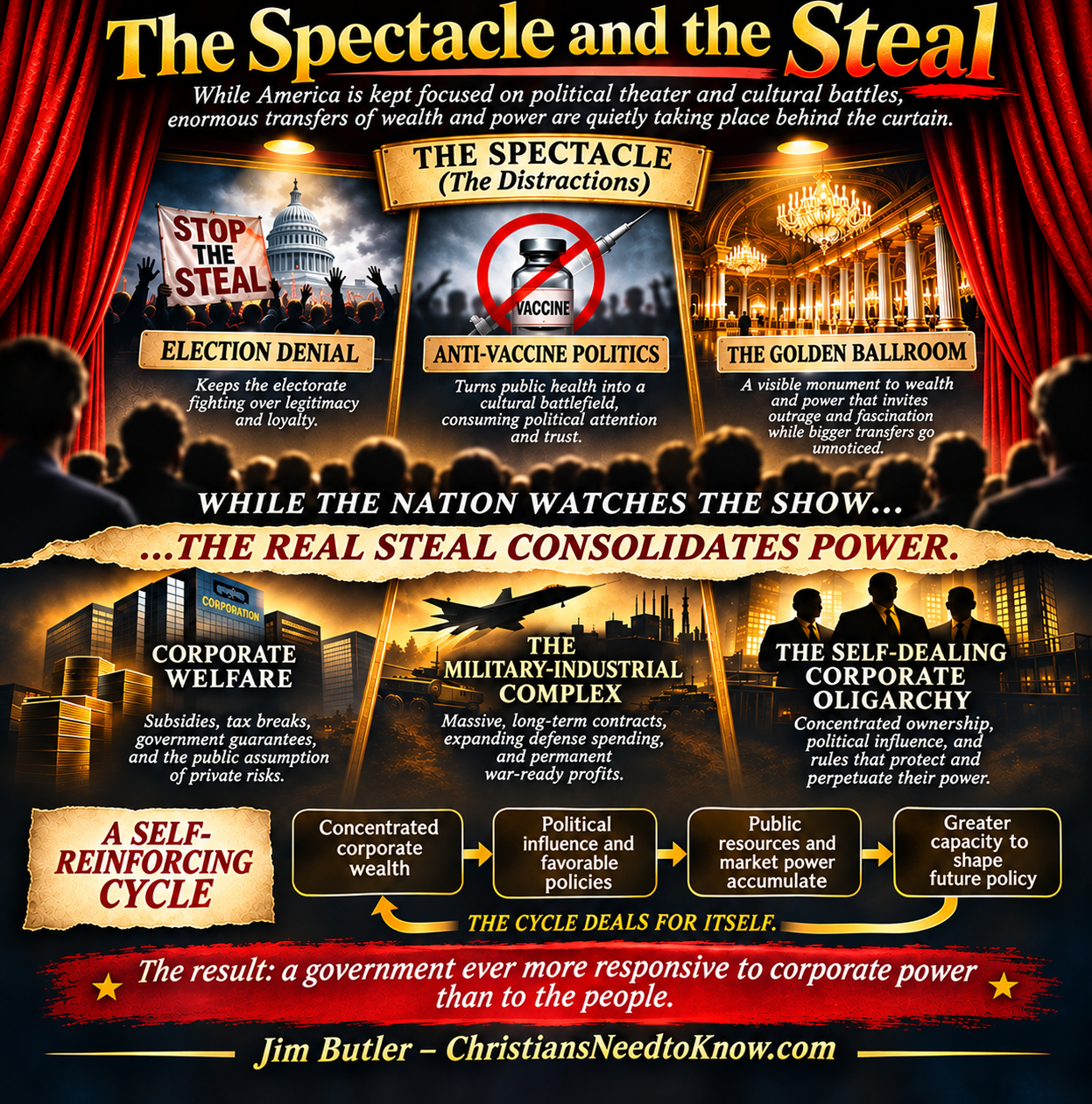
Political Distraction Theory: The Spectacle and the Steal
It’s the oldest trick in the book: Keep their eyes on the spectacle while your hands perform the steal.
In my emerging Political Distraction Theory, the President was not so much the King as a powerful Rook serving the interests of even more powerful players on the political chessboard. A pawn is expendable. A Rook is powerful, moves aggressively, and can dominate entire ranks and files.
The result of Political Distraction Theory:
james butler
a government ever more responsive to corporate power than to the people.
He commands attention, moves aggressively, and appears to control the board. But does he control the game?
And perhaps the more important question is: Who owns the chessboard?
They Own the Silence
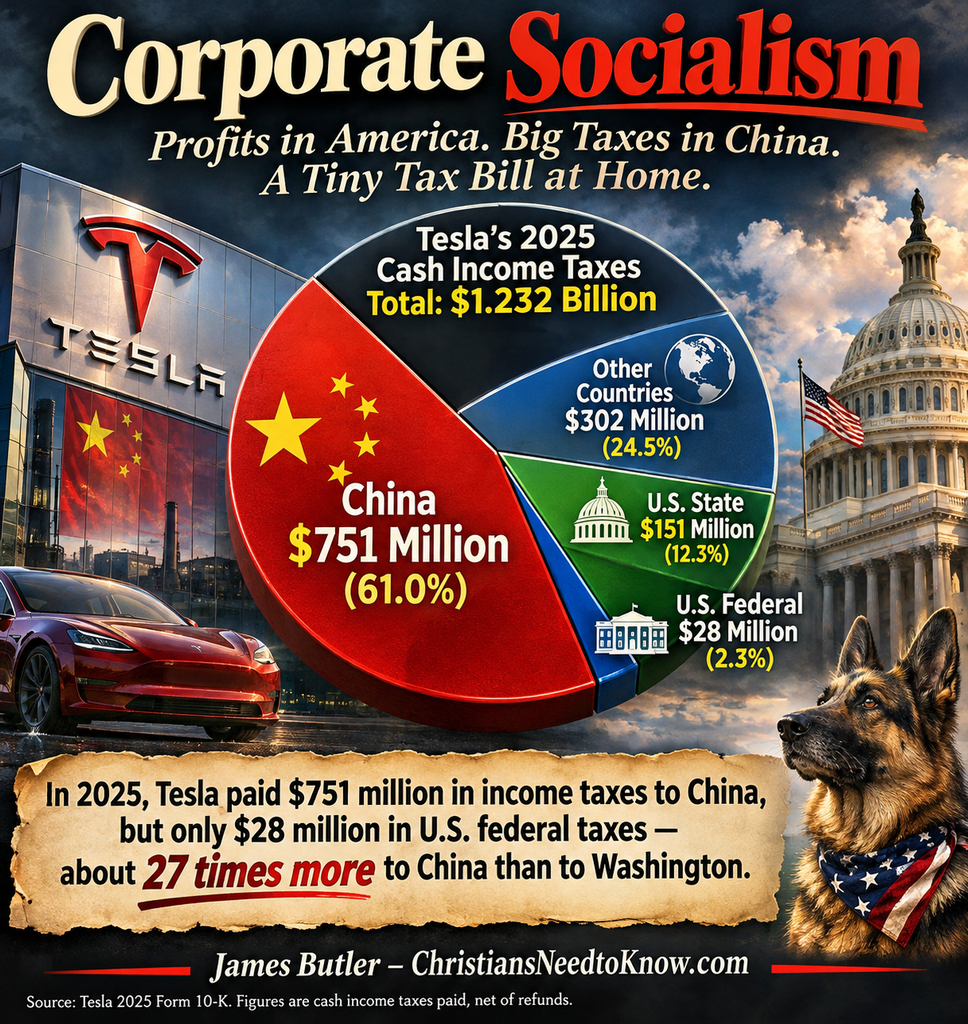
The author uses Tesla’s Form 10-K as example that would have remained silent and in the shadows had its leader not taking up a chainsaw and joined the spectacle circus. By doing so, the corporate leader pulled back the veil showing that an “America First” insider’s corporation actually paid 27 times more to China than to Federal taxes.
Omertà
There is a fascinating similarity between player U.S. corporations the Sicilian mafia’s code of Omertà:
- Silence: Never reveal the organization’s secrets.
- Loyalty: Never betray fellow members or cooperate with authorities.
- Discretion: Keep criminal activities out of public view and avoid unnecessary attention.
The preceding analogy does not suggest that U.S. corporations are organized crime syndicates. Rather, it highlights certain commonalities in organizational behavior, particularly the preservation of power, protection of economic interests, cultivation of political influence, and preference for operating beyond public scrutiny.
In Political Distraction theory, a politician is useful as long as he or she spins the distraction so that the players can continue business in anonymity. The ultimate sin in this system is for a Rook to consider himself King, above the players who installed him as Rook. When the spectacle becomes the business on the board, the players’ system collapses. For example, John Gotti, the “Dapper Don” mafioso, discovered this too late when he discovered that the spotlight which illuminates the throne also illuminates the evidence.
Political Leadership Change: The Ultimate Test
The ultimate test of this theory comes when political leadership changes. Does the concentration of wealth and power change with it, or does the game continue with different pieces?
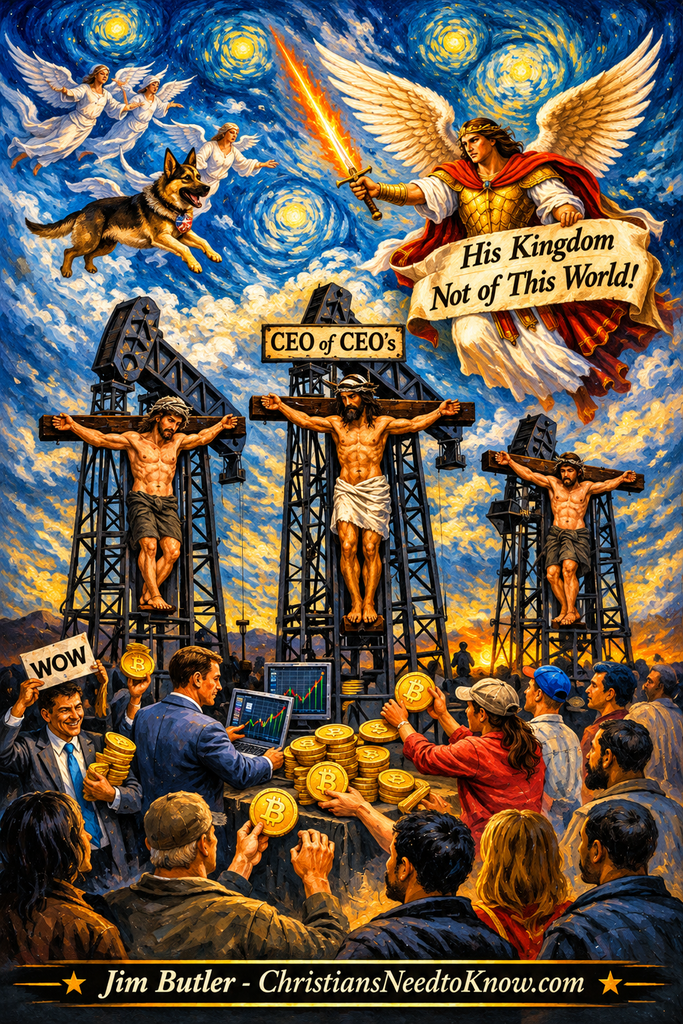
The teachings of Jesus Christ do not call us to become fellow Rooks in the political spectacle, maneuvered by the powerful in pursuit of earthly kingdoms.
Rather, Christ calls us to build our lives upon the enduring spiritual foundation of faith, anchored in the Rock of Ages, not upon political systems whose power and promises may crumble with the next administration.
The chessboard belongs to this world. The Rock of Ages does not. Jesus did not teach withdrawal from the suffering of the world. His teachings call believers to serve the poor, defend the vulnerable, practice justice, and resist the temptation to worship earthly power.
Faithfulness is not measured by how successfully Christians maneuver on the political chessboard, but by how faithfully they follow Christ when the pieces are swept away.
Jim Butler