Resurrecting the Day the Music Died: How Churches Forgot the Congregation Was the Choir

A Lesson Under the Balcony

Once there was a church, Second Methodist, that prided itself that, though it was “Second,” it sat the largest chancel choir in the county. Every member wore not only a robe to match the church carpeting but a stole for every color of the Christian year. But time was not kind to the choir program. On this Sunday, Suzie reflected on the empty chairs in the choir loft, that now held guitars and drum sets for the contemporary service.

“I miss them so. I can still hear them!” Suzie remembered choir friends who crossed over Jordan. She glanced around this Sunday and saw some familiar choir faces.

“We have so many choir people in the congregation. Why is our singing such a dud?” She puzzled, missing the harmonic refrains that embraced her on the hardwood chancel cantata days.

But one Sunday, late for church, she entered through the back arched Sanctuary doors and took a seat under low ceiling balcony area. Speakers dotted along the ceiling, positioned to help those poor souls seated in sanctuary purgatory. Pot lighting too brightened the hymnals of those who drew the short-straw under balcony cheap seats.

But following that Sunday, a wonderful thing happened. Suzie opted again for the enclosed cheap seats under the balcony, along with her remaining choir friends. Even the remnants of the bell choir gathered, like chicks around a heat lamp on a -5 Missouri winter morning.

Soon the under-balcony seating area was first-come-first-served. Unlike the vaulted peak of the forward elegant seating, the cheap under-balcony seats held a magic that main area lacked. The old choir members voices found their parts again, not as an organized choir, but as though an angel had visited them in their grief over the missing choir ministry. Though the choir robes and stoles hung in their dark, closeted tombs, the harmonic embrace returned again, as though the old choir members became like children who discovered a hidden secret door on a playground.

What happened? How are the following alike: 1. The under-balcony seats, 2. The old Temple Beth Israel in Phoenix, 3. The adobe walled and hardwood floored sanctuary of Church at Litchfield Park?

I have sat in each of those seats and found the wonderful truth: People sing better when the room gives their voice back!
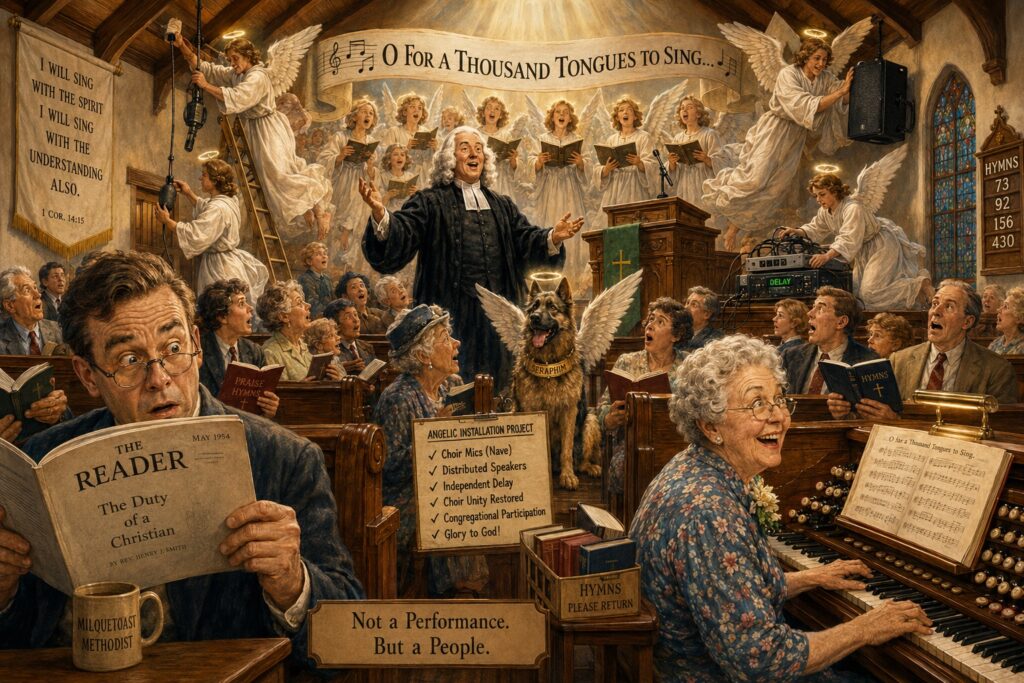
People sing better when the room gives their voice back.

JPB

The under-balcony seats, old Temple Beth Israel, and the Church at Litchfield Park remind us that, while some structures have perfect acoustics, like the Temple and the Church, a smaller church can discover a similar level of singing acoustics and return a vibrant sound to its congregational singing, without a huge financial cost.

As senior pastor of three churches and executive pastor of a fourth, my wife and I visited over 25 churches over the years and made some congregational singing observations. I am also indebted to Bruce Wardin of Wardin, Cockriel and Associates, a sound expert who inspired me with his acoustic insights as we rebuilt our church audio and video system as part of a six figure insurance claim. In particular, I had a front row seat listening to how he approached acoustical problems. By his side in Wardin’s acoustical visions stood Dr. Hal Walgren, whose generosity and shared vision made the acoustical work at the Church at Litchfield Park a reality.

While I can’t duplicate the Phoenix Symphony’s production of Handel’s Messiah on your hardwood chancel, I can share with you and your congregation some revolutionary acoustical insights for your sanctuary. These will range from the modest to the extravagant, depending on your budget. Whatever size your congregation, you will find resources for improvement. In fact, I wrote this with the less than 200 attendance church in mind. For those larger churches, let me know the results of implementing some of these ideas pastor.jim@christiansneedtoknow.com

The Church Parlor Effect

We have forgotten what Soren Kierkegaard argued: God is the audience. The congregation are the actors. Worship leaders are merely prompters or guides.

God is the audience.
The congregation are the actors.
Worship leaders are merely prompters or guides.

-Soren Kierkegaard

Church sanctuaries are often treated liked parlors. A church donor or endowment fund make a gift of fine carpeting, heavy curtains and wall treatments, and rich bookcases. Sound in that room is swallowed up like singing with your face stuffed into a feather bed. Or, the acoustics could bounce off block walls and cement floors, turning the room into the acoustic blend of a preschool and disco.

Sadly, the same acoustical trap snares the unaware sanctuary. Fine carpeting is laid, along with pew cushions, for the comfort of the parishioners. The pastor is given the finest lapel mic, the piano is mic’d, the organ is cranked up. The church board backslaps one another on the fineries of the worship center.

Then someone says in a board meeting, “Young people don’t want to hear the organ! They want guitar and drums.” So the board approves a drum set, two electric and a bass guitar, with mics for the singers. A Bose sound system produces the finest sound possible from the front of the sanctuary. But the congregational singing still falls hushed like a cry into a memory foam pillow. The praise music simply transformed the hymns into a heavy metal straight jacket still restraining the melodic arms and legs of the congregation.

The Old Methodist Secret

Someone said, “Methodists are Episcopalians who can sing!” That is true. The historic Methodist voices would rattle the hardwood floors and oak beams of their chapels, resonating the hillside like a fine cello. But a sad thing happened on the way to the electric church … the music died.

You may say, “Jim, how dare you! Why we broadcast on Youtube and get likes every Sunday! My mother even watches from her care home.”

Yes, but your congregational singing has succumbed to the parlor effect.

“You don’t know how gifted our church staff is! Why our associate pastor plays five instruments.”

Glorious. Ecstatic. I’m sure she’s having a wonderful time on Sundays, while your church members long to find their under-balcony experience. Afterall, the congregation are the players, right?

Observe the hardwood and acoustics at play at the First United Methodist, Houston.

The Attack of the Bee Gees

In another attempt revive singing, Second Methodist nominated Sarah, a soprano, to lead the hymns (no one else volunteered). A strange thing happened, people actually started singing in the congregation. But something felt off.

Spectral Narrowing

The people who followed Sarah were the other sopranos. The male basses, baritones, and altos immediately dropped out due to senior ears unable to hear their parts. The tenors could not hear others to join. The result was a soprano led group solo, not unlike an odd remix of the Bee Gees singing the congregation version of “Stayin’ Alive.” This was the same in both traditional and contemporary services. Congregational singing sits an octave below soprano leadership. Psychologically, the lower parts, such as male voices, think, “I must be off pitch” and stop singing.

Harmonic Collapse

Let’s do a mental checklist. If your church has experienced the following, put a checkmark as part of your church singing differential diagnosis:

Once basses and baritones disappear:

* harmonic support collapses

* the room thins out

* altos lose anchor

* only brighter upper voices remain audible

That further encourages:

* more soprano dominance

* less male participation

It becomes a self-reinforcing loop.

Are you still with me, or have you gone home yet?

Acoustic Solution

The following will give both the church member, the leader, and the sound engineer a solution to work toward. This will take work.

The Under -Balcony Effect

The solution is stop making one high soprano carry the room and rebuild the hymn sound around the whole congregation.

Practical Patch {Highlight what would work for your church}

1. Lower the hymn keys

    Drop most hymns 2–4 semitones. Put melodies where men, altos, and older voices can actually sing.

2. Use a lower lead voice

    Best leader profile:    alto, tenor, baritone, or mixed duet, not solo soprano dominance.

3. Lead from the nave, not only the chancel

    Place one or two confident singers among the people. The congregation follows nearby voices better than distant stage voices.

4. Mic the congregation

    Add 2–4 hanging choir mics over the nave, lightly compressed and EQ’d.

5. Use delayed side/rear speakers, with delay of 1 millisecond per foot

    Feed the nave mics subtly into distributed delay speakers so people hear “the room singing,” not just the leader.

6. Turn the leader down

    The leader should be a guide rail, not a soloist. Slightly above the congregation, not floating two octaves above the soprano section like a hymn drone.

7. Restore lower-mid warmth

    EQ for human body:

    250 Hz–1.5 kHz.

    Do not scoop the mids. That is where men, altos, and congregational warmth live.

8. Use organ/piano as pitch anchor

    Strong introductions. Clear melody. Supportive rhythm. Avoid wispy or dragging accompaniment.

Ideal Sunday setup

Leader: alto/baritone duet

Key: lowered for congregation

Sound: leader modest, congregation mics lightly reinforced

Speakers: delayed side fills, not front blast

Goal: everyone hears nearby human voices

The musical cure is simple:

Move from “follow the soprano” to “hear the congregation.”

That brings back the basses, the altos, the buried harmonies, and the courage to sing.

Congregation Acoustic Slat Reflection System

A Prototype

Suzie arrived at church after the congregation installed the Nave Acoustic Participation Rail. As she sat in her regular pew, she saw the four Audio Technica choir mics, that usually hung over her former choir, were added over the congregation. Along each side wall hung four Yamaha powered speakers delayed 1 millisecond per foot, again directed to the congregation. The subtle hardwood wave form of the sidewall panels gave the impression of gentle waves.

Once the congregation started, “O For a Thousand Tongue to Sing!” she felt again that which she had lost since the day the choir disbanded — the day the music died. She felt the harmony, the resonating baritones, altos, the climbing tenors, and soaring sopranos as they recaptured the beauty and power of the Methodist hymn sung by God’s people!

I created and submit this prototype to the church acoustic engineer crowd — a Nave Nave Acoustic Participation Rail – Slat Reflector System. The nave is where the congregation sits. Below are two designs. The key is that the wall system contains both concave and convex hardwood wave shapes to prevent echo effect.
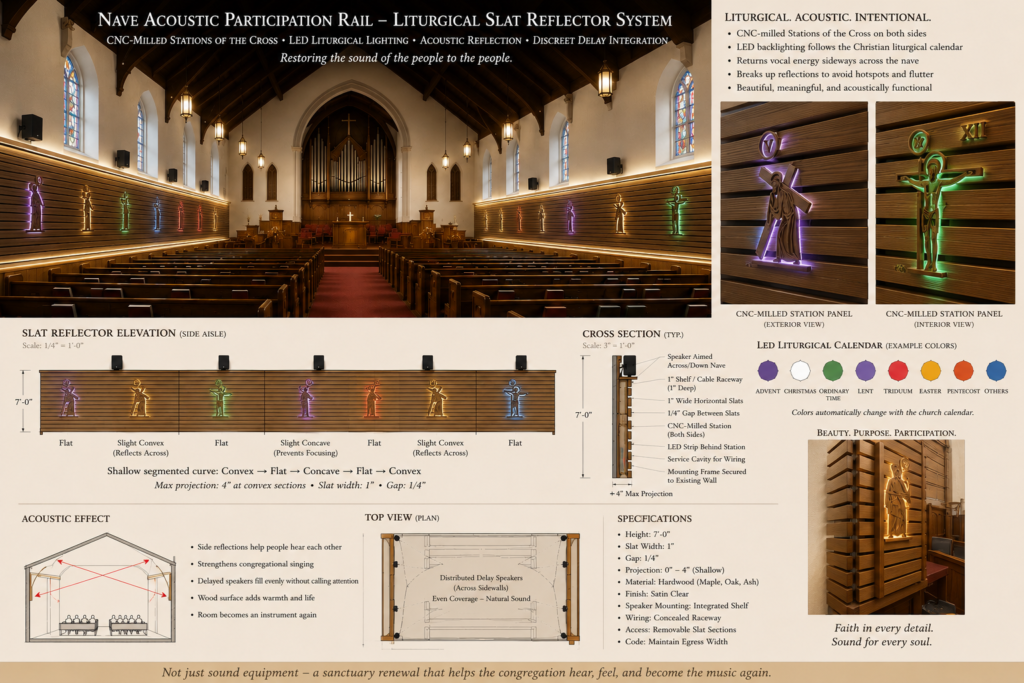
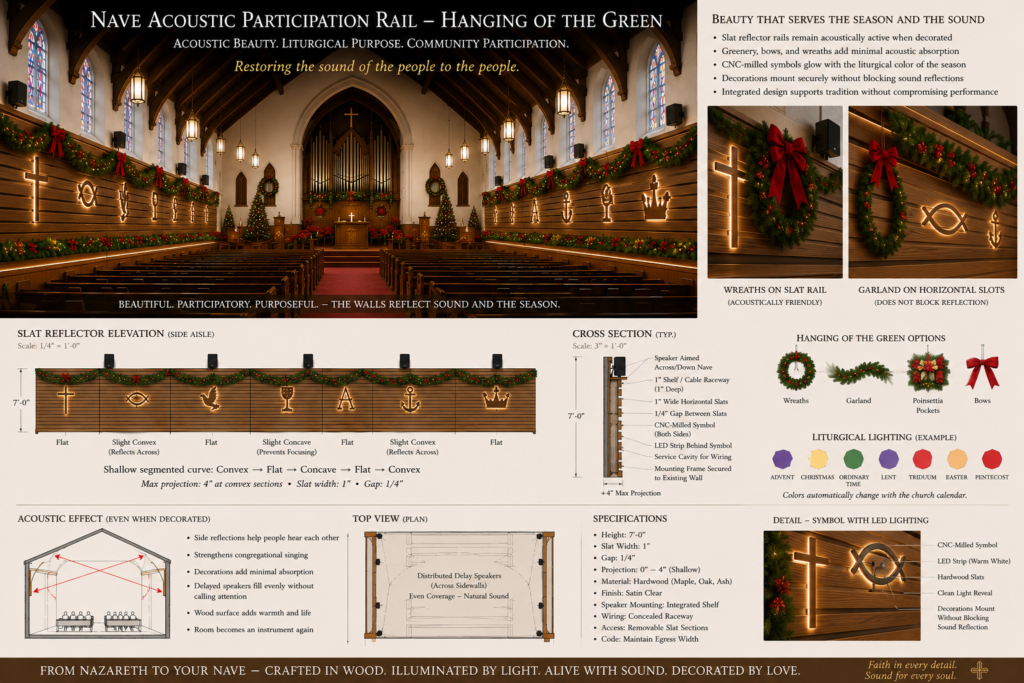
Stations of the Cross Motif with Laser CNC Cut and Backlit Icons
Exhibit: Hanging of the Green Decor Along with Preserving Acoustic Balance

A Living Wall

Memorial Baltic birch plaques

Once remembered in stone beyond the church doors, they are now remembered in wood within the living sound of worship. Wouldn’t this be an excellent way to remember our departed brothers and sisters, who accompany us as a cloud of witnesses?

Once remembered in stone beyond the church doors, they are now remembered in wood within the living sound of worship.

JPB
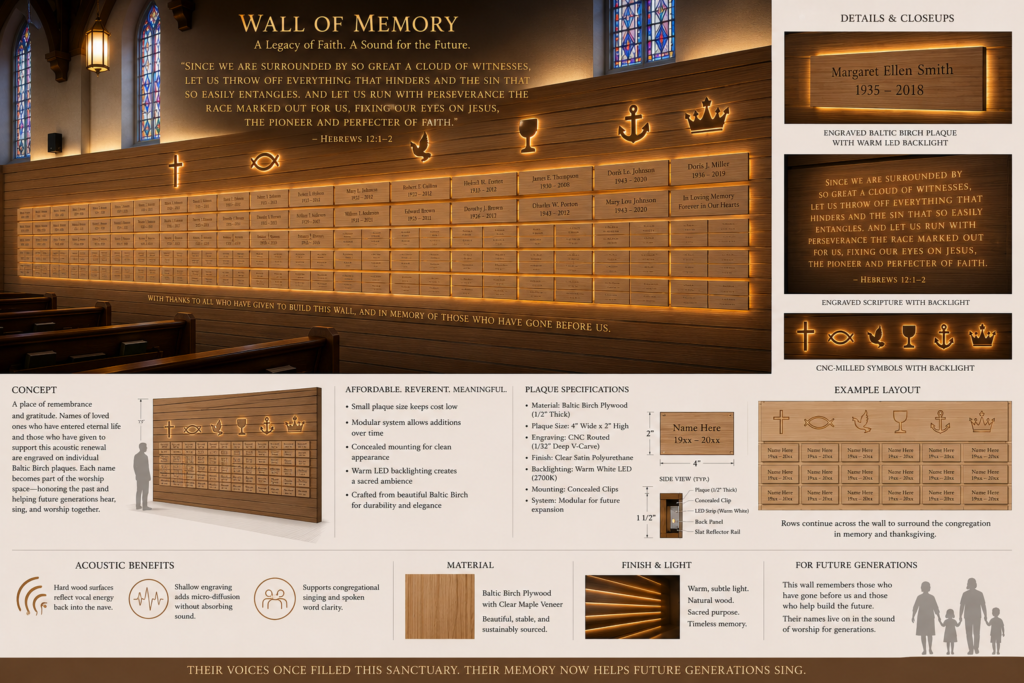
The Wall of Memory. Individually engraved Baltic birch plaques, removable if edits needed. Acoustically part of the sanctuary.
Worship the Lord with gladness;
come before him with joyful songs.

-Psalm 100:2

In My Heart a Melody,

Jim

Acoustic Toolbox

Again the list below was put together with the smaller church in mind. The segmented wood reflector system could be built by a DIY group in a church. The size of the panel could be scaled to fit the congregation. For example, if everyone in your church sits two-thirds back in the sanctuary, create your own version of the acoustic slat system where the people sit. The goal is not “a noisy restaurant” rather the congregation’s “harmonic awakening” experiencing what those old Methodist church member’s felt when they roared, “O For a Thousand Tongues to Sing!”

Acoustical Wall Materials

Core Structure

Baltic Birch Plywood

Specification Recommendation

Type of wood for wall slat panels: Void-free Baltic birch plywood

Thickness 3/4” nominal

Grade B/BB or better

Purpose Structural slat substrate and reflector rigidity

Advantages:

* Excellent rigidity

* Stable under HVAC changes

* Excellent CNC machining behavior

* Acoustically lively

* Low resonance coloration

* Durable for long-term installation

Finish Veneer

White Oak Veneer (Preferred)

Specification Recommendation

Species Rift or quarter-sawn white oak

Veneer thickness Architectural grade

Finish Satin polyurethane

Appearance Warm neutral tone

Advantages:

* Warm reflective acoustic character

* Elegant sacred-space appearance

* Excellent dimensional stability

* Timeless architectural aesthetic

* Strong grain consistency

TC Helicon VoiceTone C1 Pedal {Real Time Pitch Auto Tune Correction}

Qty: 1 Approx Price: $150

Run it in “Chromatic” Mode to “set it and forget it” as it gently auto tunes to the nearest pitch.

Purpose:

  • Very subtle pitch stabilization for hymn leader
  • Helps congregation follow pitch center
  • Should be used VERY gently
Musical Toolbox and Parts list

Revised Quality-Focused Budget

ItemQtyApprox EachSubtotal
Yamaha DBR10 Powered Loudspeaker
Price: $449.99
URL: https://www.sweetwater.com/store/detail/DBR10–yamaha-dbr10-700w-10-inch-powered-speaker?utm_source=chatgpt.com
Number of Reviews: 503
Rating: 4.8
Featured Tag: None
Merchants: Sweetwater + others4~$450~$1,800
Audio-Technica PRO 45W Hanging Choir Microphone
Description: None
Price: $169.00
URL: https://www.sweetwater.com/store/detail/PRO45W–audio-echnica-pro-45w-cardioid-condenser-hanging-microphone-white?utm_source=chatgpt.co
Number of Reviews: 81
Rating: 4.7
Featured Tag: None
Merchants: Sweetwater + othersNeed 2 to 4 suspended over congregation ~$170~$340
DBX DriveRack PA2 Loudspeaker Management System
Description: Speaker delay system
Price: $512.15
URL: https://www.guitarcenter.com/dbx/DriveRack-PA2-1379945713612.gc?template=0y7n73MAL4Km&utm_source=chatgpt.com
Number of Reviews: 774
Rating: 4.8
DBX DriveRack PA2 Loudspeaker Management System

$512.15•Sweetwater + others

Use this device to delay the congregation powered speakers 1 millisecond per foot.

Note: The assumption is that the church already has and uses a digital soundboard, such as a Behringer X32. Delay could be programed into sound boards like these, but I added the DBX DriveRack PA2 to manage the congregation speakers separately for clean separation. The congregation powered speakers must be used gently as they create awareness, “I can hear myself and others now when I sing” versus “I am now broadcasting.” The impression will be like one whose ears were stopped up felt such relief when they popped open.

So, there you have it. Let me know your experience as you rediscover congregational singing as an instrument itself. – pastor.jim@christiansneedtoknow.com

Make Lasting Friends in Church

12 This is My commandment, that you love one another as I have loved you. 13 Greater love has no one than this, than to lay down one’s life for his friends. 14 You are My friends if you do whatever I command you. 15 No longer do I call you servants, for a servant does not know what his master is doing; but I have called you friends, for all things that I heard from My Father I have made known to you. 16 You did not choose Me, but I chose you and appointed you that you should go and bear fruit, and that your fruit should remain, that whatever you ask the Father in My name He may give you. 17 These things I command you, that you love one another. – John 15

If you’re like me, you may not naturally make friends but have to work on it. Good news! Today we are talking about how to make friends at church. We will address the friendship crisis in church. This will provide a foundation to make new friends in church and for life.

Jesus on the eve of the crucifixion, the night of the Last Supper and the institution of the Lord’s Supper, told his disciples, ” 15 No longer do I call you servants, for a servant does not know what his master is doing; but I have called you friends, for all things that I heard from My Father I have made known to you.” The Lord gave them and us the gift if friendship with God and one another. It is a gift you can receive today.

The Friendship Handicap : “Solo Party of one; Table for One”

Notice how easy it was to make friends as a child. Messy friendships … you threw up in your home-room class. You all endured dread teacher, “Ms. Meany,” who turned out to be quite nice in spite of her name. A food fight in the cafeteria bonded you with another student as you hid under your new friend’s food tray.

Why is it so difficult today to make and keep friends as an adult?

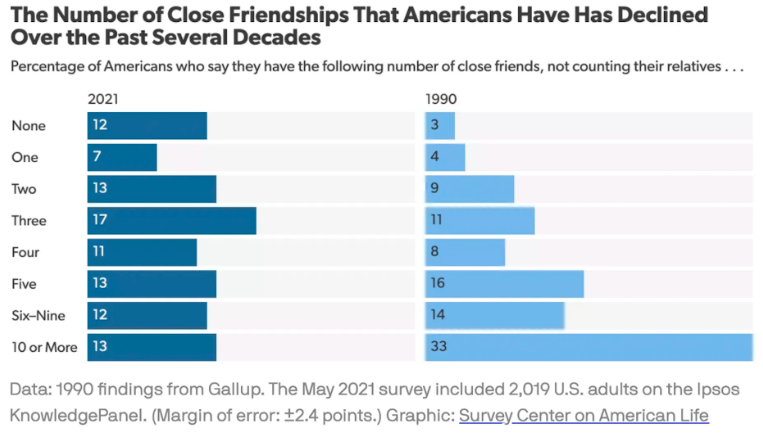
The Survey Center on American Life shows how we have become more friendless over the years. Between 1990 and 2021 those with two or fewer close friends had increased from 16% in 1990 to 32% in 2021.

Find Stillness and Begin True Friendship

True friendship and connection with God and others begin in stillness. In the Quaker church, aka Society of Friends. The meeting begins as you come in and someone shakes your hand. Then you “Listen from the stillness.” This is a sense of connection with God, yourself, and those around you. You can’t be friend with others if you are not at stillness and peace within yourself. If you are running around looking for someone to shake your hand and be an instant friend, you will be disappointed.

Quaker meetings are simple gatherings that usually last around an hour and are based on silence. There are no ministers, creeds, or set hymns, prayers, or sermons. Instead, Quakers gather in silence to quiet their minds, open their hearts, and listen to new insights and guidance. 

During the meeting, people may share what they discover with those present, which is called “ministry.” Anyone can give ministry, including visitors. For example, you might be invited to talk about what brought you to the meeting, and your experience. 

Ministry is what is on one’s soul, and it can be in direct contradiction to what is on one’s mind. It’s what the Inner Light gently pushes you toward or suddenly dumps in your lap. It is rooted in the eternity, divinity, and selflessness of the Inner Light; not in the worldly, egoistic functions of the conscious mind. – Marrianne McMullen, 1987, Quaker faith & practice 2.66

From the stillness of worship, people sometimes feel moved by the spirit to stand and speak, or sometimes sing. Quakers refer to this as vocal ministry, and its hallmark is that it comes from deep within, or from God. Stillness gives us understanding.

Friendship Takes Time

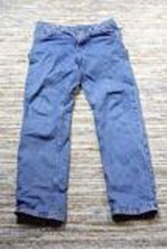
How many times have we heard, “I tried that church, but they weren’t friendly to me. Nobody said ‘Hello,’ not even the pastor.” “They don’t like me because I am not this at not that.” It’s like you arrived with stiff new jeans while everyone else enjoys the broken in jeans of longtime friendship.

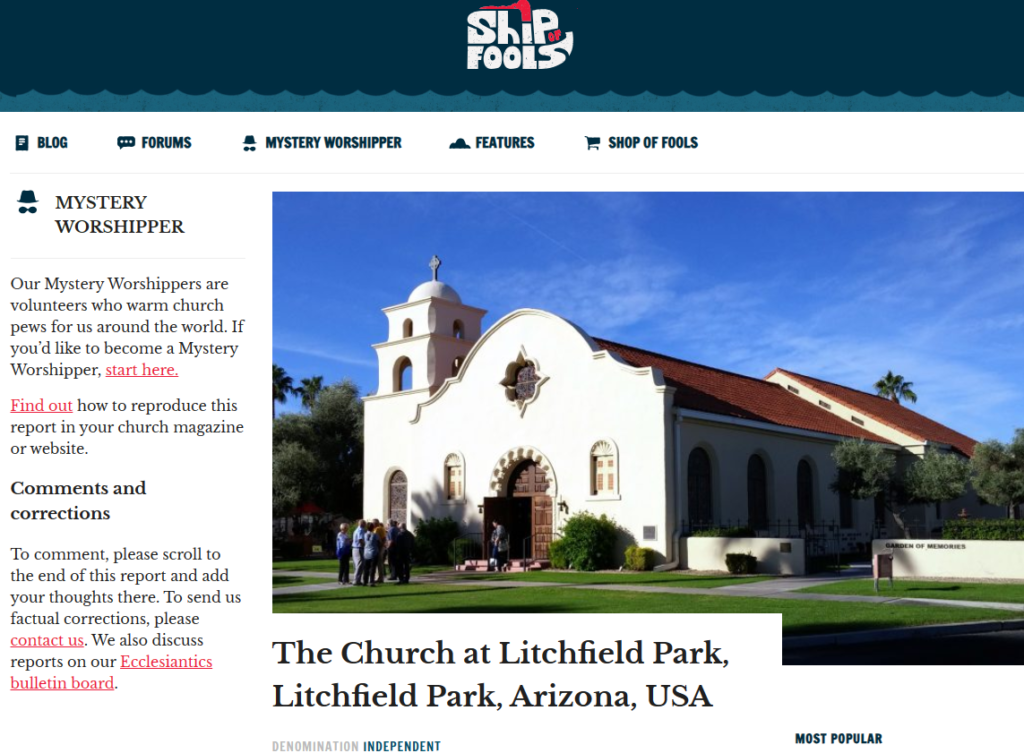
I read of a Mystery Worshipper for Ship of Fools church review website who visited a church where I previously served as Executive Pastor.

Ship of Fools: The Church at Litchfield Park, Litchfield Park, Arizona, USA

Did anyone welcome you personally? One of the associate pastors, wearing a black Geneva gown and green stole, was standing at the door. She shook my hand and said, ‘Good morning. Good to have you here.’ Inside, everyone was too busy visiting with friends to take note of a stranger.

The above Mystery Worshipper did not understand that making friends takes time.

Persevere to Make a Friend

A man turned to his wife while leaving church one Sunday in a huff. The man told his wife in the parking lot, “Honey, we are never coming back to this church. The people don’t like me. They didn’t like what I wore. Nobody was friendly. Why I even tried to shake hands with a deacon, who turned on his heels and walked the other way.” His wife smiled and said, “I’ll give you three reasons why we are coming back – 1. Jesus said, ‘Love your neighbor,’ 2. That deacon is a neighbor, and 3. You’ve got to come back; … you’re the pastor!”

Tom Whittaker’s right foot needed to be amputated following a car accident in 1979. He thought this derailed his future as a young athlete. Yet following this serious accident, he regained his strength and continued mountain climbing. His first attempt on Everest was in 1995. On May 27, 1998, on his third attempt, Whittaker reached the summit of Mt. Everest, a lifelong dream, making him the first person with a disability to accomplish this feat. Tom Whitaker of Arizona was the first disabled person to climb Mt. Everest.

My young sons and I heard him speak about what he learned on his journey to conquer Everest, where he said, “Don’t let the averted gaze of others deter you from your appointed destination.”

In my third pastorate of a United Methodist church, I tried a lunch meeting with a group of fellow pastors … two  Methodists, a Presbyterian, and an Episcopalian. I showed up with my new jeans as a former Southern Baptist … and felt not as high church, sophisticated as the others. The conversations seemed to walk around me and felt at times as the invisible man. But I determined not to let the averted eyes deter me, kept showing up, and discovered my new jeans broke in and was accepted by the group. I learned as a pastor not to let disappointed looks and averted eyes deter me from building friendships.

One of my best friends in my first church, Deacon Ralph Spotts, initially voted against me coming as new pastor because I was too young. The church voted me in as pastor, and Deacon Ralph volunteered anyway to show me around the community. He introduced me to the Lion’s Club. Every Sunday in the Sanctuary, his senior Berean Bible class doors opened and I would see him seated as teacher at the table. Eventually, I buried his beloved wife who died of cancer. Sometime later he called me one morning at the church to come help him. I barely understood him as he had suffered a devastating stroke and lay slumped over the kitchen counter. Time passed and he was the only person I knew who left a skilled nursing home to return home and marry a widow in the church. I presided over the wedding standing with his grown children. Had I been deterred by his averted eyes on that first “Nay” vote, our friendship would have never occurred.

Tom Whittaker explained further what mountaineers do when they get into trouble: “When mountaineers get into trouble, they look for the next handhold. Then the next handhold.”

“When mountaineers get into trouble, they take it one handhold at a time. Then the next handhold.” – Tom Whittaker

Determine that you will climb that friendship mountain and make a friend at church. This next Sunday look for your the next friendship handhold.

Handholds to Friendships at Church

  • Study the weekly worship bulletin and look for meetings where food is served or where you will served together as a group. The bulletin as the website may not be updated:
  • Examples –

Pancake Breakfast

Dinner for Eight

Men’s Breakfast

Camp cookout

  • Be “new” with others. Join a newly formed group.

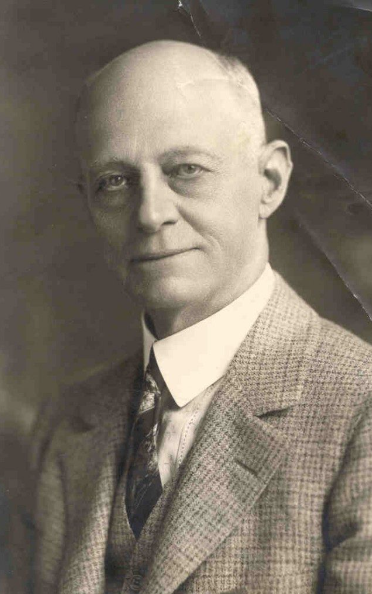
Arthur Flake the Southern Baptist genius and father of modern Sunday School taught that new groups grow faster than existing groups. If they could find 8 – 10 new people, the Southern Baptists would form another Sunday School class … because it provided a way to make new friends around studying the Bible. The genius he discovered – “New groups grow faster than old groups.” Southern Baptists grew to this day to be the largest Protestant denomination in the United States.

Arthur Flake – Father of the Modern Sunday School

For pastors and church leaders – what new groups have you formed? If you have a long-standing existing class, consider short term study seminars open to all.

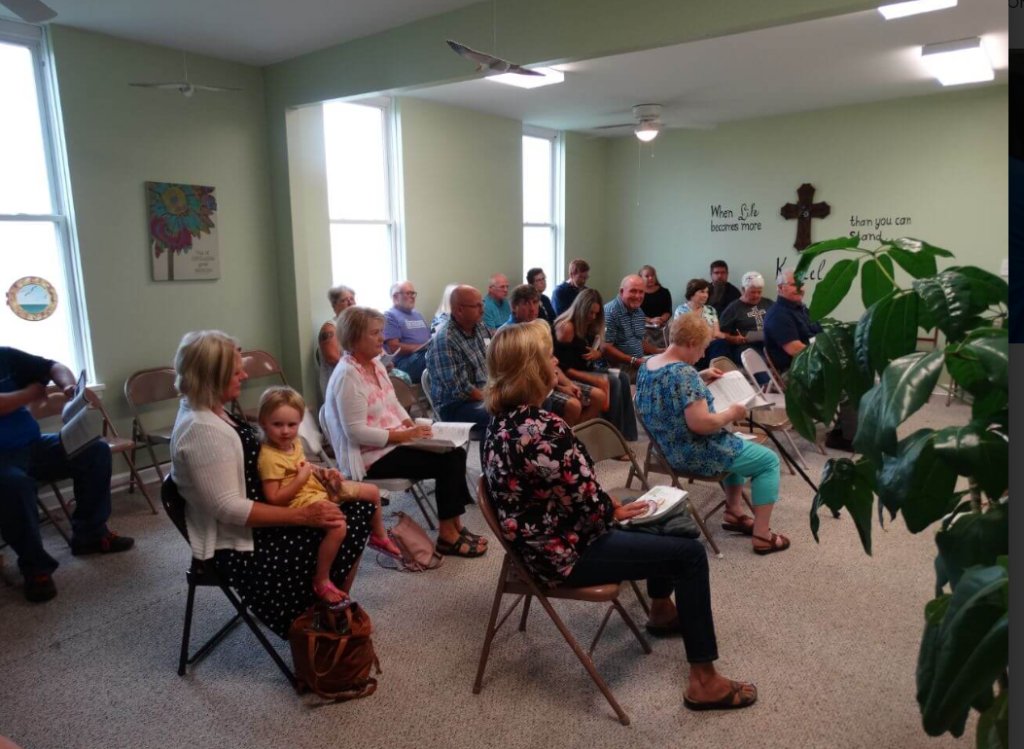
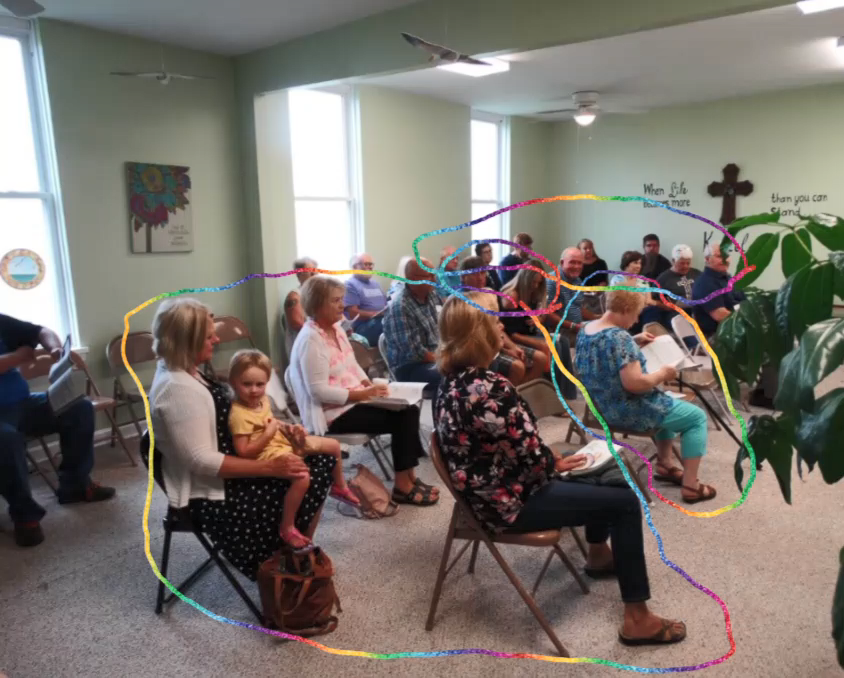
Ekron Baptist Church Sunday School

The above Sunday School group at Ekron Baptist shows a typical Sunday Bible study. If we can take some liberty and peel back layers to show hypothetically why it is so difficult for a visitor to make friends in any longstanding Sunday School group.

The three ladies in the front have attended the same closed bridge circle for the last five years. The men seated at the back went to high school together and serve in the same Lion’s Club for over 10 years. The younger adults are children of the Lion’s Club members who plan on attending a Lion’s Club BBQ with their parents after church. Each of these groups in a group are siloed off in their existing circle of interest and apart from new people. This is not wrong; it simply is.

You as a visitor arrive. The people smile and greet you, but you don’t understand why you feel like an outsider. You feel like new stiff blue jeans in a group of broken-in jeans.

Existing Groups Revolve around Prior Formed Backchannels of Communication

If you attend an established group, give yourself permission to feel like an outsider for a year. Arrive early and stay late. Make your own name tag.

As a long-term stakeholder in the group, go out of your way to include the newcomers as lines of communication often proceed along lines of relationship rather than official group communications. There’s no need for a newsletter or an accurate website because word-of-mouth spreads naturally among friends, unless you are new. Though the church’s website contains a calendar six months out-of-date, those part of the in-network get all the information they need. The newcomers remain outside the homegrown chain of communication.

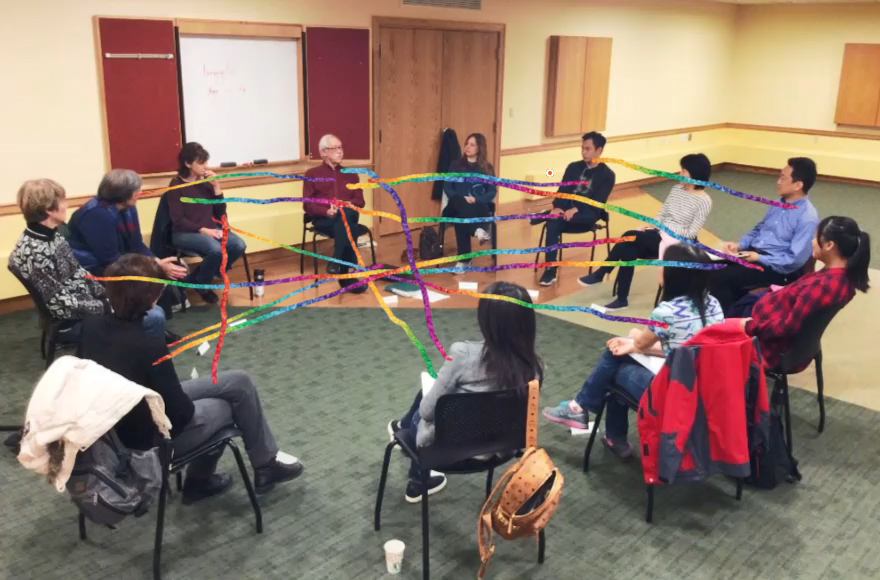
New Groups Create Direct Lines of Communication with Others

Your Friendship Exercises This Week

“When mountaineers get into trouble, they look for the next handhold … Then the next handhold.”

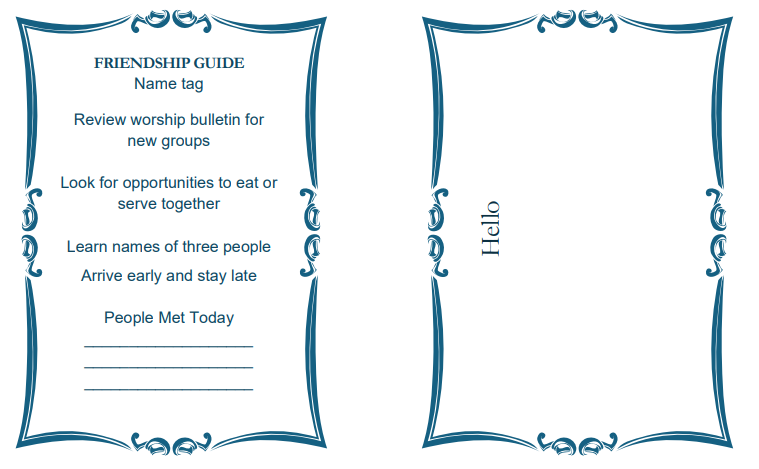
  1. Wear a name tag with your first name. You can print out the one below.
  2. Review the weekly worship bulletin for opportunities to eat or serve together.
  3. Learn the names of three people.
  4. Arrive early and stay late.

Click on this link to download your copy of the Friendship Guide.

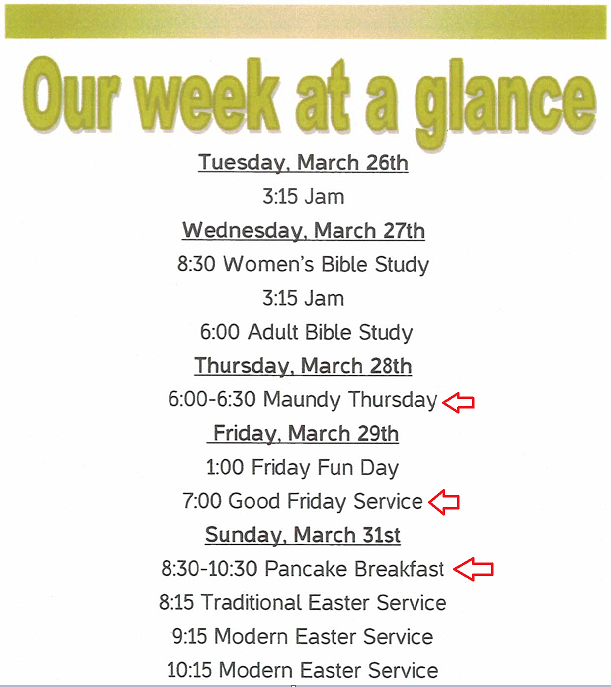
The above example shows a Men’s Pancake Breakfast and special new services for Holy Week.

Power Tip for Pastors and Teachers

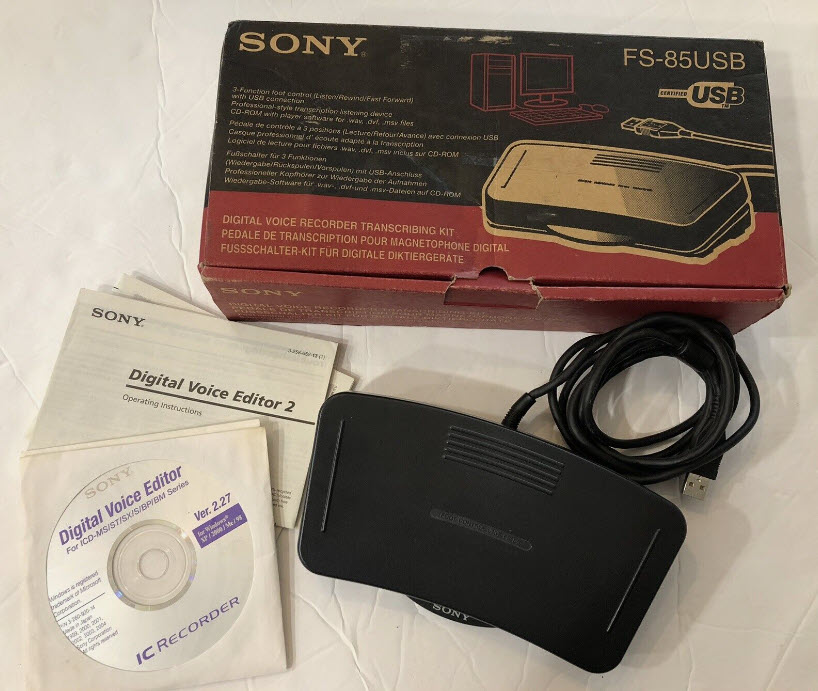
If you want to become a master of learning names and staying in touch with people. At the beginning and end of the service, turn on a voice activated recorder in your pocket. You can transcribe later the names, needs and milestones of those in your care, as well as reminders for follow-up. People will think you had a photographic memory, while you had a little help from St. Sony.

Sony Digital Voice Editor

Jesus

Jesus gave us the example of how to be a friend of God and others. Remember, friendship with God begins with willingness to trust, obey, and desire to know God intimately. May the above start you on a friendship journey with God and others that will last this life and into the next.

Your Friend,

Pastor Jim

 No longer do I call you servants, for a servant does not know what his master is doing; but I have called you friends, for all things that I heard from My Father I have made known to you.

John 15:15

The Liver & Onions Test

As Walmart steaks run $30 for a package of two, folks turn stares of disbelief to beef liver as the affordable cut of meat. The $300 grocery tab reinforces a gut punch that politicians delivered a message, "Let them eat liver!"

Applying the liver & onions test to the church, what one ministry stands as critical nourishment for today’s church? There is one clear winner – Bible study.

“Let them eat liver!”

Bible Deserts

King David reflected on the nourishment received from studying the Word of God, saying, ” The law of the Lord is perfect,  refreshing the soul.” Like a food desert, where nourishing food is priced out of a neighborhood due to location, so some churches fail to thrive due to missing a balanced Bible study.

They are more precious than gold,
    than much pure gold;
they are sweeter than honey,
    than honey from the honeycomb.

Psalm 19:10

You Are What You Eat

Jesus knew the importance of this concept in his temptation when he responded to the devil, “Man shall not live by bread alone, but by every word that proceeds from the mouth of God” ( Matthew 4:4), a quote from Deuteronomy that beyond physical bread we need the bread of life that comes from heaven.

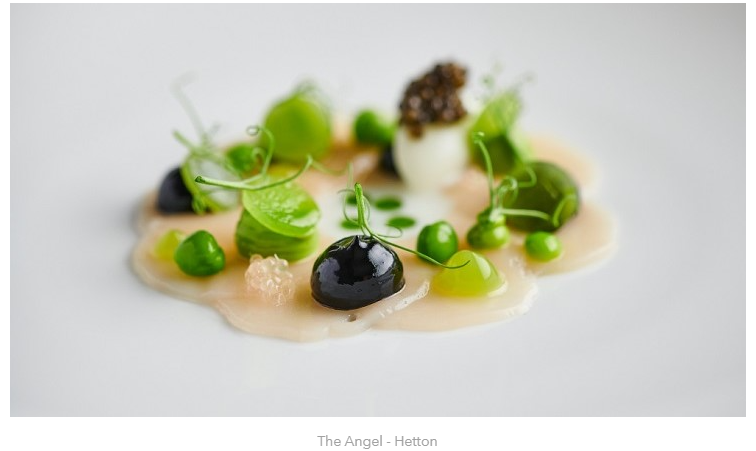
Chef’s Table

Take a busy pastor as an example, what more could he or she do considering an already jammed Sunday schedule? How could the church move from a spiritual food desert to a Michelin Star?

No Michelin Pot Luck’s

No Michelin Star is awarded to a church pot luck rather to a restaurant where every aspect of the meal was planned. A busy pastor could begin by asking volunteers to form a Christian Education Council assigned to create a unified system of Christian education that will help church members continue their Bible study “from the basket to the casket” (As our Baptist friends teach).

ABT – Always Be Teaching

Applying the ABT method, the Christian Education Council could begin with a sheet of butcher paper by mapping what classes are taught and what is being taught from the nursery to senior adults. What curriculum is used for children, youth, and adult classes?

You may say, “Pastor Jim, I’m too busy to teach. I lead multiple services on Sunday. The people get what they need from my sermons.” Believing that concept, a pastor is on the path to “congregation drift” to be blown along whatever favorite study they stumble into. Years of congregational drift in Bible study could unravel those inspiring Sunday sermonettes.

The ABT method does not mean the pastor does all the teaching but that the pastor is engaged with what is being taught.

Seasons of Learning

Overheard – “People don’t want to be committed to leading a class every Sunday. They want to go fishing, to the lake, or to their timeshare in Aruba.” Rather than resist natural patterns of ebb and flow, use your butcher paper to draw an education stream that flows with the bends and eddies.

The pastor, staff, and a few key leaders can survey what material is presently being taught and ask, 1. Does the material support our church and denomination? 2. Does the material give the leaders what they need to proving a compelling class experience that builds the spiritual life of the participants? 3. Can others use the material and duplicate the experience?

1. Does the material support our church and denomination? 2. Does the material give the leaders what they need to proving a compelling class experience that builds the spiritual life of the participants? 3. Can others use the material and duplicate the experience?

Back to the butcher paper and magic markers, write Fall, Winter, Spring, and Summer. While worship services are best designed around the Liturgical Calendar, Christian Education is best designed around the school year, which provides natural breaks and pauses –

Fall, Winter: Advent – Christmas, Spring: Lent- Easter, Summer.

Take a moment and outline what classes are taught for all ages during these season. Next, use the denominational resource that fits your church, select classes and materials to balance out the year, giving times of rest and refreshment as in a school year.

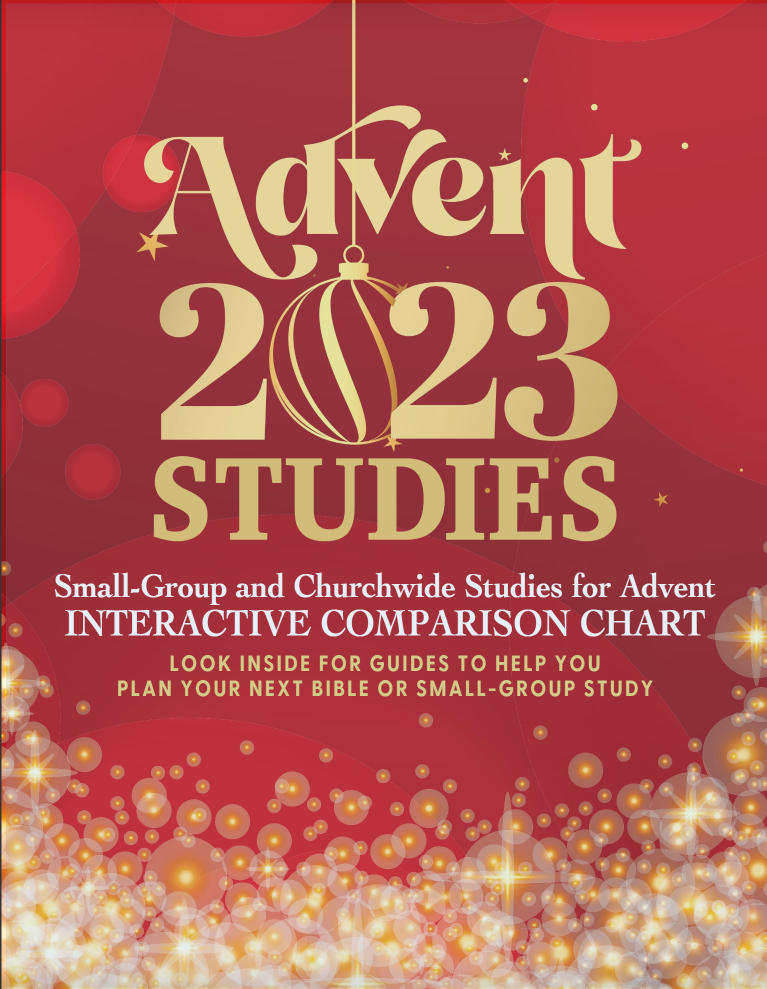
For United Methodists, Cokesbury is their publishing house. Southern Baptists look to Lifeway for resources. Considering Advent, a church could use this interactive Cokesbury’s Advent Studies guide to schedule class resources.

No Artificial Ingredients

Some adult classes have met for years using the curriculum they like, and they have no plans to change. You may say, “Pastor Jim, one leader in our Methodist church is teaching Nazarene material.” Rather than foment an insurrection over a teacher’s use of nonapproved curriculum, the solution lies in forming new groups based on vibrant Bible based material. New groups always grow faster than older groups. Rather than battling to change a group, add a new one in line with your direction. Or, as overheard in the work-a-day world, “People hate to be sold … but they love to buy!” If I had to do my ministry over, I would have taken the above high road of a gentle, patient path toward change. I would have worked a lot more on consensus and valuing the opinion of the negative vote versus running roughshod over those holding a contrary position. Looking back, I could have spent more time actively listening to church members than talking at them.

Now that your church year class schedule is mapped, consider where the classes will meet, review the budget, and ask adult participants to share in the expense of materials. How does your Christian Education budget reflect the priority of Bible Study as a spiritual discipline?

Master Chef

The important work of the Christian Education Council means nominating teachers and leaders who best fit the group and material taught. When calling those persons to ask them to consider the opportunity, it is a comfort knowing they have the resources to be successful and along with a set start and end date, improves successful recruiting for teachers and leaders. The Christian Education Council meetings, rather than all business, should involve sharing the journey over food and drink and sharing of the journey.

When I served as Executive Pastor in my last position, the Kitchen Director would bring leftovers on a cart from the Wednesday night meal so that we might break bread together in our staff meetings the next day. Some of the best days of church staff planning revolved around those meals together. While we didn’t solve all the world’s problems, we left satisfied and excited about the new plans in ministry.

Two things have enteral life – the human soul and a church volunteer position without an end date.

“17Jesus said to Peter the third time, 'Simon, son of John, do you love me?' Peter was grieved because he said to him the third time, 'Do you love me?' and he said to him, 'Lord, you know everything; you know that I love you.'  Jesus said to him, 'Feed my sheep'” (John 21:17, ESV).

Bon Appétit

Pastor Jim

Jim’s Maxim

Played out in risk sensitive fields. The electric outlet not GFCI protected becomes the favorite to run extension cords out to parties on wet grass. The corporate exec who uses “password” as password.

As a pastor and insurance adjuster, this maxim to capture the Delta-V of where you are likely to experience a loss. It is a moving target. In my last church, now over 80 years old, we inspected and protected every outdoor outlet with GFCI “ground fault” protection. To my shock (forgive the pun), the lawn carnival, water slide vendors, not finding a nearby outlet, opened the nearest door and plugged extension cords into 20 amp nonprotected electrical outlets.

Using “Jim’s Maxim,” the jump-house people, who assured us that all their equipment was “GFCI protected,” admitted to me they either didn’t have GFCI or forgot to bring it. Now we had 500 youth and children on campus to enjoy the nearly inflated water slide. We had a choice – shut down the main event …. or make a Home Depot run for a solution:

Solution: a 20 amp GFCI extension cord.

-Pastor Jim

For Flock’s Sake, Shorten Sermons!

Pope Francis, on the subject of preaching, said, “How many times have we seen people sleeping during a homily, or chatting among themselves, or outside smoking a cigarette?”

When people laughed at the image, Francis said, “It’s true, you all know it … it’s true!”

Concluding that line of reflection, Francis said, “Please be brief … no more than 10 minutes, please!”

Pope Francis said this to the fifth General Audience of 2018, attended by 8,000.

Baptist deacons responded in shock about parishioners smoking during the sermon, declaring that “the Christian thing to do is to humbly slip out, have brunch at the local diner then sneak back in before the benediction.”

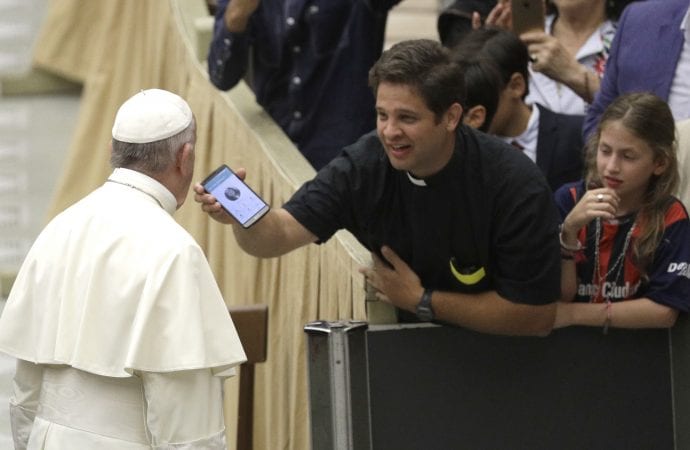
A priest shows Pope Francis a mobile phone before the start of the weekly general audience in the Paul VI Hall at the Vatican, Wednesday, Aug. 2, 2017