
The Perfect Cause for the Rich
Forces the Poor to Pay for Their Own Charity
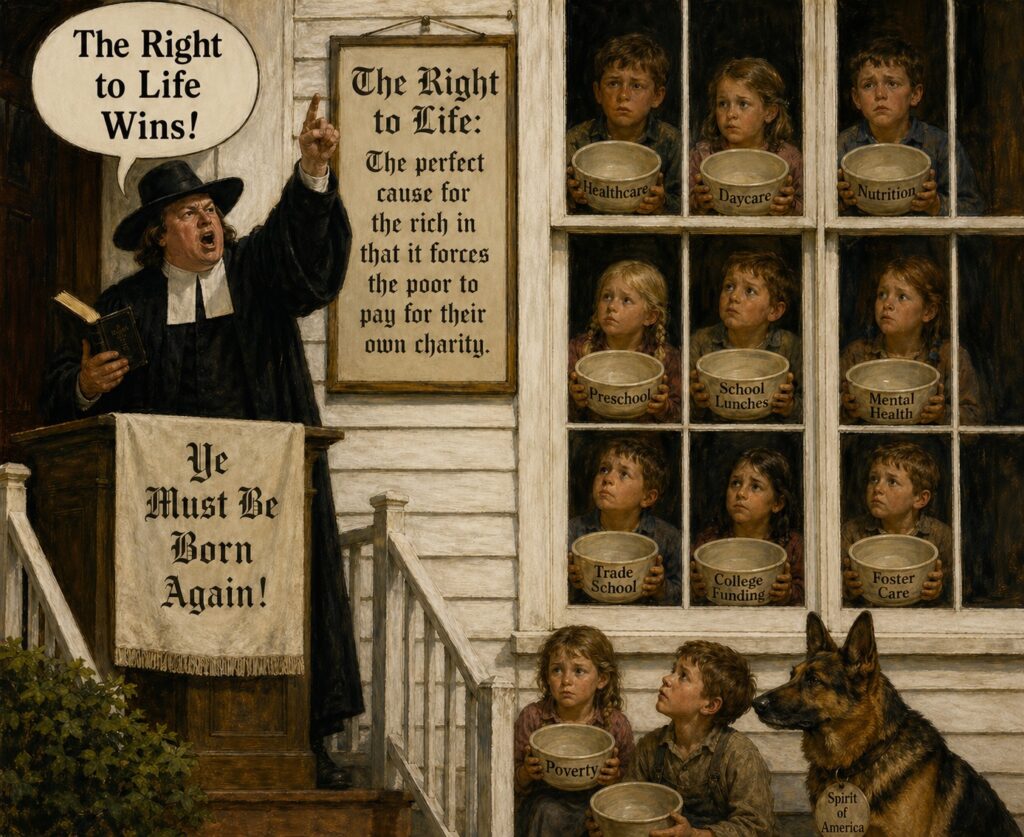
Then Jesus said to the crowds and to his disciples: 2 “The teachers of the law and the Pharisees sit in Moses’ seat. 3 So you must be careful to do everything they tell you. But do not do what they do, for they do not practice what they preach. 4 They tie up heavy, cumbersome loads and put them on other people’s shoulders, but they themselves are not willing to lift a finger to move them." - Gospel of Matthew 23
The Forgotten Guest of Honor
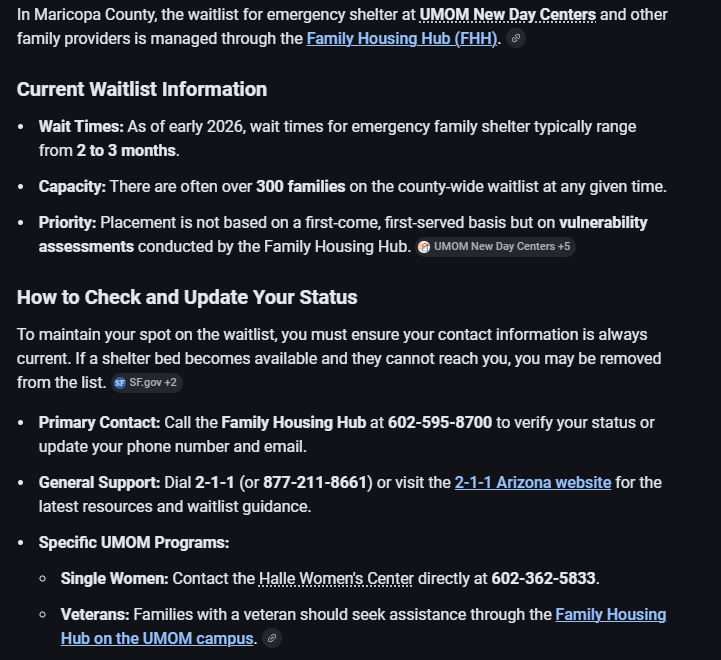
At seventeen, Tina sat in the front row of the annual banquet for the Right to Life Women’s Center in Tempe, Arizona. In her arms rested her two-month-old daughter, Roxy. Crystal spoons hovered over crème brûlée as donors paused mid-bite, their murmurs rising into a soft chorus of admiration. Another life saved. Another miracle they believed they had midwifed into the world.
Tina told her story the way one learns to tell a story when it has been repeated for others: like crisply pressed cotton with a smiling voice. Estranged from her out-of-state parents, she had been living in a broken car with her boyfriend, Chad, until he left three months into her pregnancy. Alone, hungry, and afraid, she wandered the streets of Tempe wondering where her next meal might come from, and whether she should end the pregnancy and begin again.
Then she saw the sign. A smiling mother, a newborn cradled in soft light. Beneath it, the promise: Your New Life Begins Here.
“Can you help me?” she had asked when she stepped inside.
“You’ve come to the right place,” Samantha replied. “Come in. Are you hungry?”
There had been sandwiches, milk, prenatal vitamins. A video about the wonder of life. A tour past a well-stocked pantry. Then the dim room, the cold gel, the flicker of a heartbeat on a screen.
“That’s your baby,” Samantha said. “A gift from God.”
“It’s beautiful,” Tina whispered. “But how am I supposed to do this? I live in my car. I have no job. No one.”
“You’ve come to the right place,” Samantha repeated, gesturing toward shelves of diapers and baby clothes. “These are for you.”
Tina cried then, the kind of crying that feels like surrender.
Months passed. A women’s shelter took her in for the final stretch of pregnancy and a few weeks after. Then the notice came. Thirty days. Others were waiting.
When she left, she carried her baby in one arm and a plastic bag in the other, emblazoned with a heart-shaped womb and flanked by angels. Inside: a week’s worth of baby food, six disposable diapers, and twenty dollars in McDonald’s coupons.
By the end of the first day, her car had been impounded.
She began going to the public library, pushing little Roxy in a squeaky stroller. It was warm. It was quiet. It had computers.
“What a beautiful girl,” a librarian said one morning.
“She’s my angel. My Roxy!,” Tina replied. “I’m trying to find us a place, but everything’s over a thousand a month. And I lost my phone when they cut my SNAP benefits. Could I borrow yours?”
He let her make calls. Shelters were full. Waitlists stretched six, eight weeks. He took messages for her, just in case.
Weeks turned into a kind of routine. Tina learned which restaurant dumpsters were safest, which workers might quietly leave untouched food in a box nearby. Hunger became something to manage rather than escape.
Then one night, those same workers were gone. The restaurant shuttered after an ICE immigration raid. The back door, once a quiet lifeline, was dark.
So she kept walking.
Behind a large hotel, she found another kind of abundance: discarded trays, half-finished desserts, the soft glow of a banquet winding down inside. It was the national convention of a pro-life organization, though Tina had no way of knowing that. Inside, there had been speeches, applause, declarations of victory and faith.
Outside, she found a nearly full container of crème brûlée, still cool.
Sitting on the pavement, she fed a small spoonful to Roxy, then took one herself using the plastic McDonald’s spoons she saved.
No one inside noticed.
No one knew that the child in that stroller would one day grow beyond this night, beyond hunger, beyond the fragile margins her mother navigated. No one at the banquet imagined that this same child, shaped by scarcity and grit, would rise through classrooms and flight schools, earn a commission, serve as a Marine helicopter pilot, and later stand on a different kind of stage.
Years later, as a candidate addressing a nation, Roxy would distill her life into a single line:
“Pro-life means whole life.”
The room would erupt.
And somewhere beneath the applause, if you listened closely, you might hear the faint tap of a spoon against glass bowl of still cool crème brûlée.
– JPB
Arizona’s SNAP (food stamp) program is experiencing the largest reduction in the nation, with more than 400,000 Arizonans—nearly half of the state’s participants—losing benefits since July 2025. This reduction stems from a combination of new federal regulations (“One Big Beautiful Bill Act”) and state-level administrative hurdles, significantly reducing this lifeline for families.
Benton.Org