How to Read the Bible in Church

“Finders Keepers!”

John Huddleston was known by his Arkansas neighbors as a “son of a sharecropper” and a “dreamy backwoodsman.” John and Sarah purchased their 49 acre home farm in 1889 for $100, later expanded to 243 acres.  One day while walking a road through his property he found two crystals which were shortly identified as “diamonds.” Today the property is owned by State of Arkansas as the only place in the world the public can search for real diamonds at “Crater of Diamonds State Park.”

More than 35,000 diamonds have been found by park visitors since the Crater of Diamonds became an Arkansas state park in 1972. Notable diamonds found at the Crater include the 40.23-carat Uncle Sam, the largest diamond ever unearthed in the U.S. Five hours from our house in MO, my wife Carol and her friend, Chris, spent hours digging for diamonds with no luck. Perhaps on our next trip!

The park’s one rule for diamonds – “Finders, Keepers!”
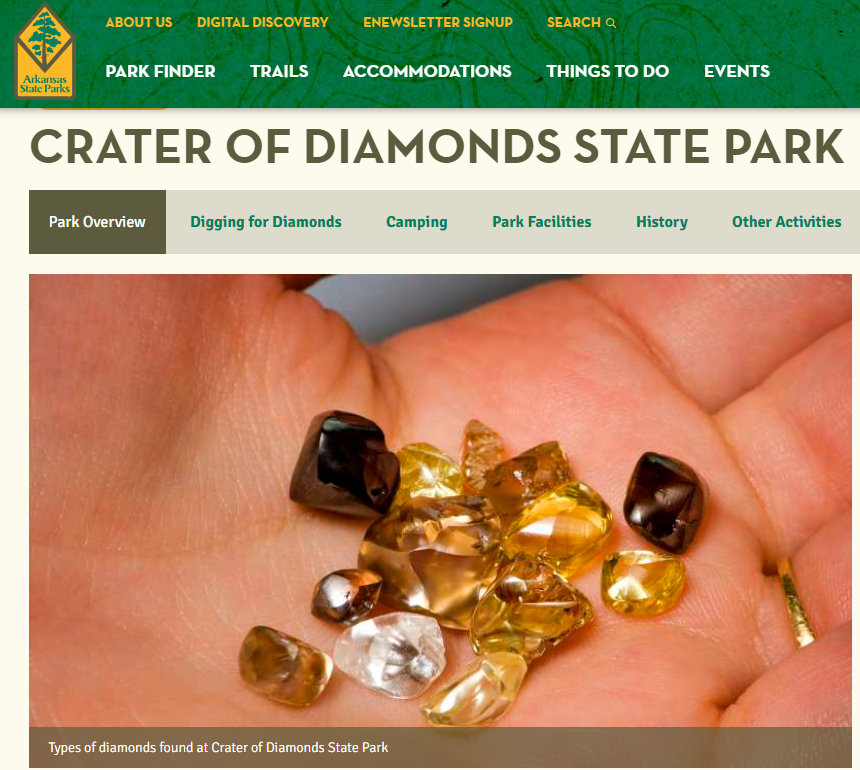
And so it is with public reading of Scripture at church.

The kingdom of heaven is like treasure hidden in a field. When a man found it, he hid it again, and then in his joy went and sold all he had and bought that field. Again, the kingdom of heaven is like a merchant looking for fine pearls.

Matthew 13:44-46

Matthew 13:44-46 New International Version (NIV)“The kingdom of heaven is like treasure hidden in a field. When a man found it, he hid it again, and then in his joy went and sold all he had and bought that field. “Again, the kingdom of heaven is like a merchant looking for fine pearls.”

The most understated and neglected part of Sunday worship is public reading of Scripture. Pianists practice and prepare for the offertory music. Pastors slave hours to prepare and deliver a vibrant sermon. Yet, the Scripture reading is approached like reading the menu at a burger  drive-thru –hurried, with someplace else to go.

The Apostle Paul wrote Timothy, “Until I come, devote yourself to the public reading of Scripture, to preaching and to teaching (1 Timothy 4:13).

So, you receive a call from the church office asking you to read Scripture next Sunday, a passage on the descendants of Noah. You think no problem. You’ve heard the Noah story many times … two-by-two into the ark. You’ve even seen the movie! 
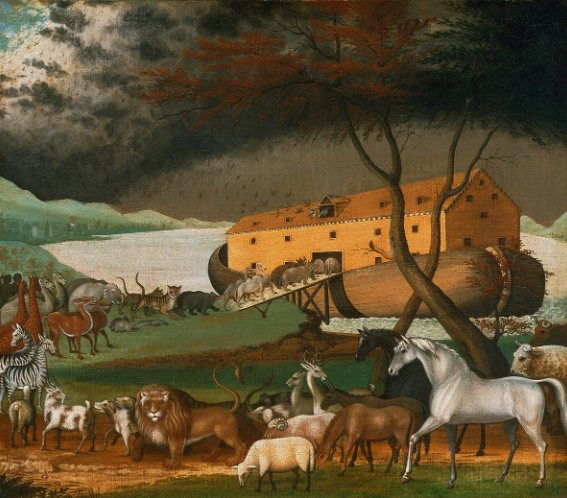
So you go about your week, grandchildren’s soccer games, golf, shopping … Sunday arrives and you open the bulletin to review the passage a few minutes before you stand up to read

26 Joktan was the father of

Almodad, Sheleph, Hazarmaveth, Jerah, 27 Hadoram, Uzal, Diklah, 28 Obal, Abimael, Sheba, 29 Ophir, Havilah and Jobab. All these were sons of Joktan.

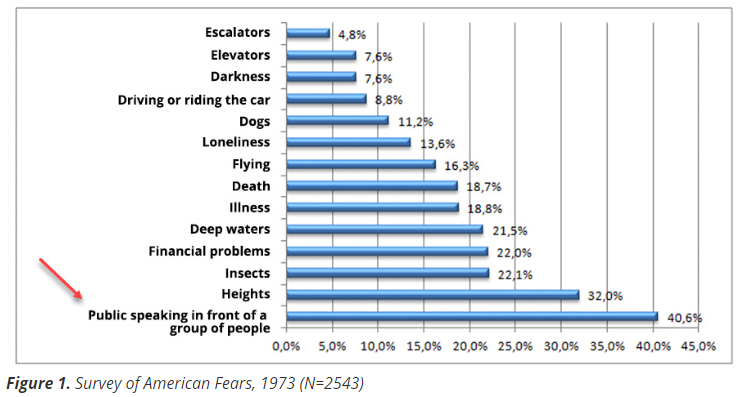
…These names appear before you … unrecognizable names … never heard before in Sunday School. What in the name of Klingon archeology are these names? Your throat tightens as you don’t have time to Google how to pronounce these names. Now you know why public speaking is #1 on the list of social fears as your knees shake walking to the lectern.
What you can’t pronounce you mumble and smudge over to go undetected and escape the lectern as quickly as possible.

There is a better way …

Today I will share with you a few tips to improve your public reading of Scripture. I learned these while serving as Executive Pastor in my last position and reading the Scripture on many Sundays. I realized that Scripture reading was the diamond field of Sunday worship. The diamonds are held in the fabric and contents of the Bible itself.

Step 1. Navigate to biblegateway.com and type in the passage you will read – chapter and verse
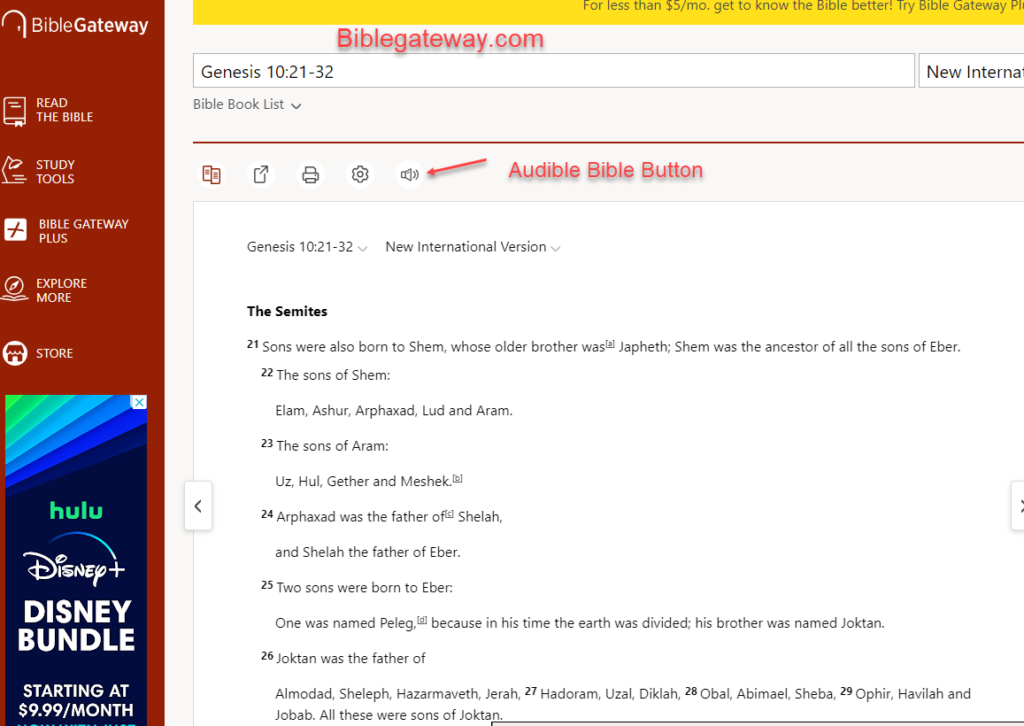
Step 2. Copy the passage into a word processor and save 16 point font in two columns

  1. Play the audible passage reading as you mark up your reading sheet – / short pause  // long pause  line up, line down pitch, and pronunciation helps
  2. Practice reading your passage 3 times. If possible, say “mic check” into the lectern microphone to check the volume before the service, speaking no more than 12 inches from the microphone.
  3. Glance at the passage and look at the people while you read.
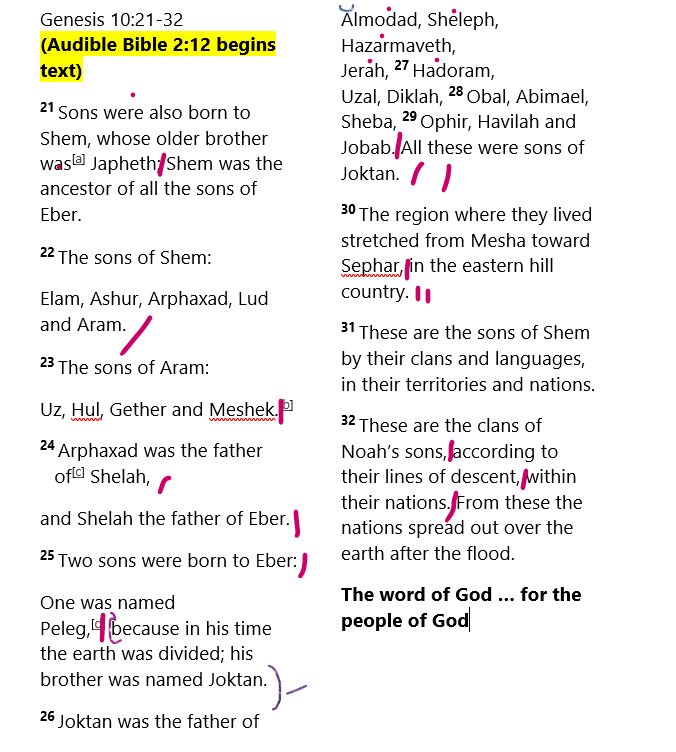
End your reading with something like, “The word of God … for the people of God!”

Try these tips the next time you read in church. You will find with your church some diamonds in your field.

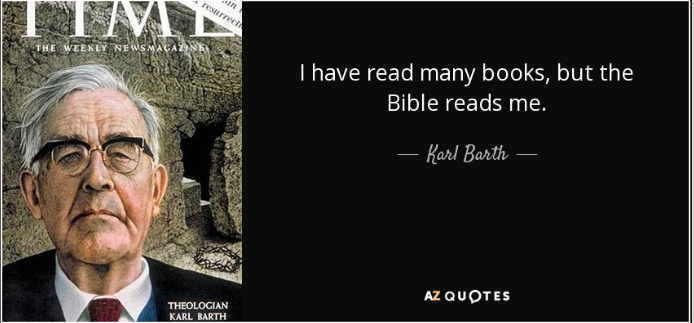
As Karl Barth wrote, “ I have read many books,  … but the Bible reads me!”

-Pastor Jim
Separate Church and Hate

Evangelical Christians, in believing about a coming Armageddon, must take care lest they actually cause an Armageddon as self-fulfilling prophecy. #separatechurchandhate

If I did a second doctorate, my thesis would be the role of well-intended souls who thought they did God’s will in forcing God’s hand to usher in the Kingdom. This was the devil’s temptation to Jesus. This was replayed in Judas’s betrayal to force Jesus’s hand. The Spanish and French Inquisitions, The Crusades, the Canadian Indian Residential Schools, and Conversion Therapy groups sought to enforce their brand of “pure religion.”

From Cronkite news

In contrast, Jesus taught – Jesus answered, “My Kingdom is not an earthly kingdom. If it were, my followers would fight to keep me from being handed over to the Jewish leaders. But my Kingdom is not of this world” John 18:36.

Jesus answered, “My Kingdom is not an earthly kingdom. If it were, my followers would fight to keep me from being handed over to the Jewish leaders. But my Kingdom is not of this world.”

John 18:36

The Third Reich sought its pure Millennial Reign. False zealot messiahs have historically proclaimed a salvation by brute force over grace. Give me the lowly, the despised and rejected, for of such is the Kingdom of God.

Jesus revealed his political party by saying, “My kingdom is not of this world.” Well-intentioned zealots have historically promoted forcing Jesus’s hand as the Messiah, including Judas Iscariot on the betrayal in the Garden of Gethsemane. In a world of hate for those of a different political bent, different ethnicity, or orientation, consider how you can enlarge your border and replace resentment and hate with grace. Consider also Jesus’s choice of disciples. Peter, Andrew, James, and John were fisherman and involved in the fishing business. Matthew was a hated tax collector, whose money was considered unclean. Judas Iscariot likely worked in bookkeeping. Simon the Canaanite was a stubborn zealot who wished for an insurrection over the Romans. Some of the disciples we don’t know what they did. Later Paul was a Pharisee and persecutor of the church.

Begin this week following Jesus’s example by making space in your life for those different from you. Remember, “Resentment and hatred have imprisoned more people than all the jails in the world combined.”

JPB

Up next the day the president told the truth

Those Who Sat In Darkness … Enjoyed the View!

In the early 1980’s church life around Southwestern Baptist Seminary in Ft. Worth, Texas, offered a selection of great churches. Dr. Joel Gregory preached at Gambrell Street Baptist, where professors fawned over his oratorical powers that mouthed “cherubim and seraphim” like he was sampling delicacies at Trader Joe’s. The flagship Travis Avenue Baptist Church, surrounded with aging housing the church was inclined to bulldoze for more parking, heralded its footprint with a steeple seen for miles and an unmatched musical program. We gravitated toward a smaller, more “Spirit filled” Southern Baptist church that prided itself on uplifting worship.

Sunday School for young adults was held in a room that could easily accommodate 30 people, with smaller classrooms surrounding the meeting area. The sliding curtains of these rooms were always shut. Sunday after Sunday we met in the darkened main room, which had no windows. The bright Ft. Worth sunshine could not penetrate our class, which had the same lighting as a funeral visitation. I began to ask myself, “Why is it so dark in here? Where are the windows?” One Sunday I peeked behind the closed curtains and saw classroom furniture jumbled between which windows filtered that Ft. Worth morning sun. I resolved to clean up the mess.

What Goes on Behind Closed Doors

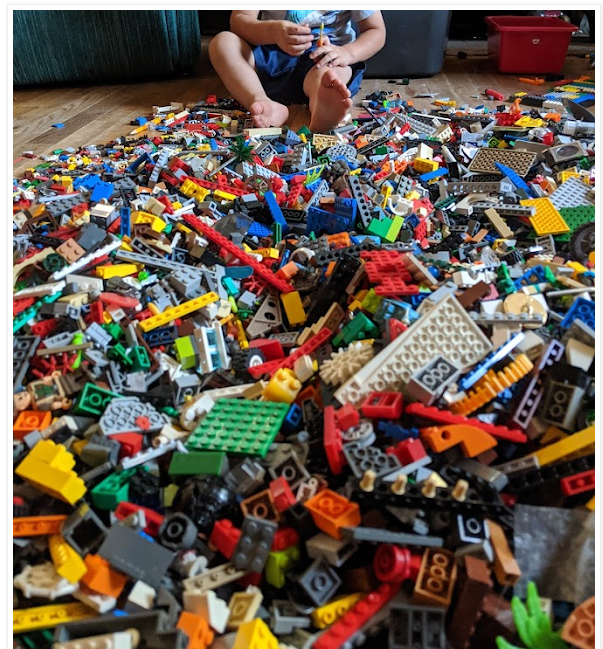
One weekday I volunteered to cleanup the seminarian classroom and wondered, “How did we bright minded seminarians fail to see the condition of our own classroom?” As I rolled back the doors of the classes, I saw every room had large windows, with furniture tossed in like a preschool party after which spoiled toddlers scattered plastic LEGOs across the floor.

Courtesy of https://www.mommymaestra.com/2021/10/brick-stamped-apple-tree-activity.html

A little exploration revealed basement stairs that descended into what would be an insurance adjuster’s purgatory. Two inches of water flooded the entire basement floor. Across from the doorway stood a high voltage breaker panel for the building. As a safety feature, rather than address the flooded basement, someone laid wooden pallets from the door to the breaker panel as a way to reach the panel without standing in ankle deep water.

“What would a firefighter do trying to reach an energized panel in the dark, on across a flooded floor, walking on pallet boards spaced wide enough to capture a foot?” Meanwhile, week after week, the heavenly minded seminarians studied biblical principles that lifted them above the cares of this world.

Cleansing the Temple

Realizing the flooded basement was well beyond my scope as a volunteer, I shut the door somewhat in shock to this day how the leadership could be detached from the condition. So I began work on what I could and pushed back the sliding curtains, cleaned and organized the surrounding unused classrooms. Once the curtains were retracted with furniture arranged less like a tsunami victim and more like a place of education, I marveled at the beauty of the light that beamed into our dank meeting hall. It was transformed as though angels were ascending and descending on these shafts of light.

No Good Deed Goes Unpunished

Come Sunday I entered excited to see the reaction of the class to the newly cleaned classroom building. Bright and cheery replaced the mausoleum we once called our class. To my shock people reacted the opposite of what I expected.

“What happened to our classroom?” “Who opened these curtains?” “Why is it so bright in here?” ” We liked it the way it was!” “Who gave permission to change our room?” And so the lament continued as seminarians mourned the passing of their dark space into the light.

My initial shame morphed into an understanding of human nature as it came to church work. Below a few insights will hopefully help those who find a bucket placed over their newly lit candle.

Carving the Underside of Pews

The monks in the medieval church carved the underside of pews in the belief that God was aware of not only that which was presented and prominent but also the underside, hidden area of our lives. Considering the monks’ example, I put in to practice a strategy that I’ve used pastoring churches and volunteering in the same.

Misericord carved underside of church seat from the church of Saint-Prix in Noizay (Indre-et-Loire, France), depicting an angel. See Wikipedia

Open Closed Doors

When I served as a Chaplain Extern at Baylor Medical Center in Dallas, I became familiar with the “Ministry of Wandering Around,” which is different from “Wandering Aimlessly.” Clergy become creatures of habit, entering their office the same way, week after week, asking no questions, head down in “holy autopilot” and off to the next meeting.

The first step in “Holy Wandering” is to choose a different path than your normal route. Open a door you’ve never entered. Ask yourself, “How would a visitor feel about our church if she entered this room for the first time?” “What does the hidden space reveal about who we are where no one is looking?”

In my first church, I found a church library that was used as dead storage locker for Sunday School quarterlies decades old. At another church a church janitor’s mop sink sat filthy and filled with unused dirty mop buckets and soiled mops. Another hidden closet revealed the chair carefully placed under the hole torn in the duct board where the custodian would take his air conditioned afternoon siesta hidden from the Arizona sun and from the church staff for that matter. No one knew where he went for those hours.

I asked the facilities manager from my wife’s school to survey our church campus and opine on upgrades and whether the work was too much for one person to do in a week. He laughed about the “too much work” and went on to suggest mop sink soap dispensing stations. His insights created a new day for our church.

No closet was safe from our scrutiny. We found electric panels in which copper pipes had been inserted for fuses and non GFCI receptacles that were used with extension cords on wet grass.

As a result of the above, an unused library junk room was transformed (after a pickup bed was loaded with faded quarterlies) into a youth meeting room, with walls opened between. Handicapped bathrooms and bridal dressing area were built. Sound systems were upgraded and installed.

We formed a DIY team at the church empowered the lay members to “Open Doors” and carve the underside of pews. This really happened in that once project involved removing all the old pews and reinforcing the underside then reinstalling them.

A Road Less Traveled

Along with opening doors, take a road less traveled to church. At one church I parked on the street where church members walked. The path was so dark, I could not see to put my foot on the curb. I worked with our brilliant new Facilities Manager, Alberto Hernandez (who is now retired and serving as a pastor of his own church) to recandle parking lot lighting and to add additional path lighting.

With Facebook streaming the rage since the pandemic, walk the virtual paths. Yesterday, I watched the Facebook service for our church only to find that the sound level for the pastor’s sermon was so low I could not hear him without switching from my phone to my computer with speakers turned up 100 percent.

Pickleball and Other Grouse Hunts

Virtual paths can be just as jumbled as the classrooms in Ft. Worth. Our present church publishes every week “Monday – Pickleball 5:00 p.m.” So, I showed up with my paddle, only to find the hall empty. “Maybe an off week. I’ll try it again.” The next week, the same empty hall. The bulletin continued to announce the event.

One week as I accompanied my wife to her handbell choir she directs, a ringer said, “I hear you are wanting to play pickleball. They have been meeting off campus but should be here next week. They don’t like to have too many players. So they don’t advertise too much.”

She introduced me to the handful of players present that night. The next week I showed up interested; no one was present in the hall. Perhaps the risk of having a new player threatened their closed group pickleball party as the church bulletin continued on “autopilot.”

Your homework this Sunday – open a new door and follow a new path.

See, I have placed before you an open door that no one can shut …” – Revelation 3:8.

Pastor Jim

Postscript

Taking my own medicine for looking behind doors, I checked the “Contact Us” link for this blog and discovered the email notifications were no longer received. I called Go Daddy who said that for a simple programming fee of $450 they would fix the issue. Short version – I was able to create a free Brevo account and installed a free SMTP form to resolve the issue after some gnashing of teeth.

“Amen!” or “Oh, Me!”?

“Amen!” … or “Oh, Me! I could write a book about church fights I mediated (or instigated) Chapter 1 – Change of worship time … Chapter 2- Install a PowerPoint projector in the sanctuary … 3- Launch any building project … 4-Clean out and toss all the junk in an unused classroom and destroy the sacred table decorations stored for the annual Ladies Mission Society … 5. Give the choir “constructive criticism” on the length of their Christmas Cantata …

Asbestos Vestments,

Pastor Jim

The Liver & Onions Test

As Walmart steaks run $30 for a package of two, folks turn stares of disbelief to beef liver as the affordable cut of meat. The $300 grocery tab reinforces a gut punch that politicians delivered a message, "Let them eat liver!"

Applying the liver & onions test to the church, what one ministry stands as critical nourishment for today’s church? There is one clear winner – Bible study.

“Let them eat liver!”

Bible Deserts

King David reflected on the nourishment received from studying the Word of God, saying, ” The law of the Lord is perfect,  refreshing the soul.” Like a food desert, where nourishing food is priced out of a neighborhood due to location, so some churches fail to thrive due to missing a balanced Bible study.

They are more precious than gold,
    than much pure gold;
they are sweeter than honey,
    than honey from the honeycomb.

Psalm 19:10

You Are What You Eat

Jesus knew the importance of this concept in his temptation when he responded to the devil, “Man shall not live by bread alone, but by every word that proceeds from the mouth of God” ( Matthew 4:4), a quote from Deuteronomy that beyond physical bread we need the bread of life that comes from heaven.

Chef’s Table

Take a busy pastor as an example, what more could he or she do considering an already jammed Sunday schedule? How could the church move from a spiritual food desert to a Michelin Star?

No Michelin Pot Luck’s

No Michelin Star is awarded to a church pot luck rather to a restaurant where every aspect of the meal was planned. A busy pastor could begin by asking volunteers to form a Christian Education Council assigned to create a unified system of Christian education that will help church members continue their Bible study “from the basket to the casket” (As our Baptist friends teach).

ABT – Always Be Teaching

Applying the ABT method, the Christian Education Council could begin with a sheet of butcher paper by mapping what classes are taught and what is being taught from the nursery to senior adults. What curriculum is used for children, youth, and adult classes?

You may say, “Pastor Jim, I’m too busy to teach. I lead multiple services on Sunday. The people get what they need from my sermons.” Believing that concept, a pastor is on the path to “congregation drift” to be blown along whatever favorite study they stumble into. Years of congregational drift in Bible study could unravel those inspiring Sunday sermonettes.

The ABT method does not mean the pastor does all the teaching but that the pastor is engaged with what is being taught.

Seasons of Learning

Overheard – “People don’t want to be committed to leading a class every Sunday. They want to go fishing, to the lake, or to their timeshare in Aruba.” Rather than resist natural patterns of ebb and flow, use your butcher paper to draw an education stream that flows with the bends and eddies.

The pastor, staff, and a few key leaders can survey what material is presently being taught and ask, 1. Does the material support our church and denomination? 2. Does the material give the leaders what they need to proving a compelling class experience that builds the spiritual life of the participants? 3. Can others use the material and duplicate the experience?

1. Does the material support our church and denomination? 2. Does the material give the leaders what they need to proving a compelling class experience that builds the spiritual life of the participants? 3. Can others use the material and duplicate the experience?

Back to the butcher paper and magic markers, write Fall, Winter, Spring, and Summer. While worship services are best designed around the Liturgical Calendar, Christian Education is best designed around the school year, which provides natural breaks and pauses –

Fall, Winter: Advent – Christmas, Spring: Lent- Easter, Summer.

Take a moment and outline what classes are taught for all ages during these season. Next, use the denominational resource that fits your church, select classes and materials to balance out the year, giving times of rest and refreshment as in a school year.

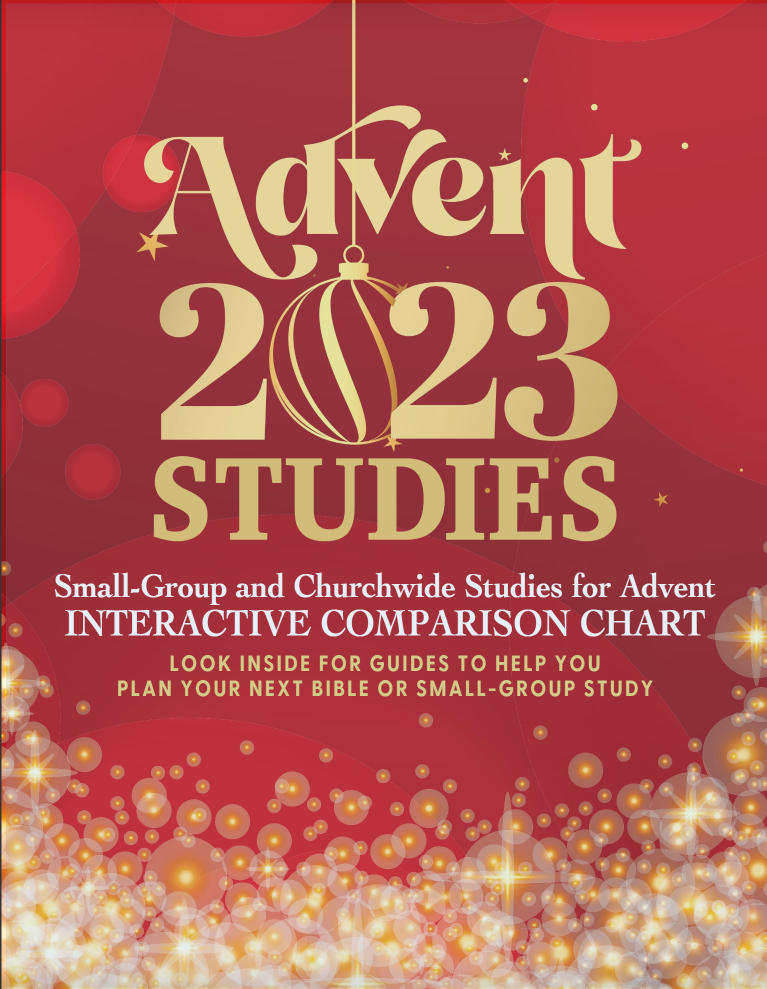
For United Methodists, Cokesbury is their publishing house. Southern Baptists look to Lifeway for resources. Considering Advent, a church could use this interactive Cokesbury’s Advent Studies guide to schedule class resources.

No Artificial Ingredients

Some adult classes have met for years using the curriculum they like, and they have no plans to change. You may say, “Pastor Jim, one leader in our Methodist church is teaching Nazarene material.” Rather than foment an insurrection over a teacher’s use of nonapproved curriculum, the solution lies in forming new groups based on vibrant Bible based material. New groups always grow faster than older groups. Rather than battling to change a group, add a new one in line with your direction. Or, as overheard in the work-a-day world, “People hate to be sold … but they love to buy!” If I had to do my ministry over, I would have taken the above high road of a gentle, patient path toward change. I would have worked a lot more on consensus and valuing the opinion of the negative vote versus running roughshod over those holding a contrary position. Looking back, I could have spent more time actively listening to church members than talking at them.

Now that your church year class schedule is mapped, consider where the classes will meet, review the budget, and ask adult participants to share in the expense of materials. How does your Christian Education budget reflect the priority of Bible Study as a spiritual discipline?

Master Chef

The important work of the Christian Education Council means nominating teachers and leaders who best fit the group and material taught. When calling those persons to ask them to consider the opportunity, it is a comfort knowing they have the resources to be successful and along with a set start and end date, improves successful recruiting for teachers and leaders. The Christian Education Council meetings, rather than all business, should involve sharing the journey over food and drink and sharing of the journey.

When I served as Executive Pastor in my last position, the Kitchen Director would bring leftovers on a cart from the Wednesday night meal so that we might break bread together in our staff meetings the next day. Some of the best days of church staff planning revolved around those meals together. While we didn’t solve all the world’s problems, we left satisfied and excited about the new plans in ministry.

Two things have enteral life – the human soul and a church volunteer position without an end date.

“17Jesus said to Peter the third time, 'Simon, son of John, do you love me?' Peter was grieved because he said to him the third time, 'Do you love me?' and he said to him, 'Lord, you know everything; you know that I love you.'  Jesus said to him, 'Feed my sheep'” (John 21:17, ESV).

Bon Appétit

Pastor Jim

RV Nation: Border Crisis Solution

How can the church, while sitting on prime real estate, recover its prophetic voice on affordable housing?

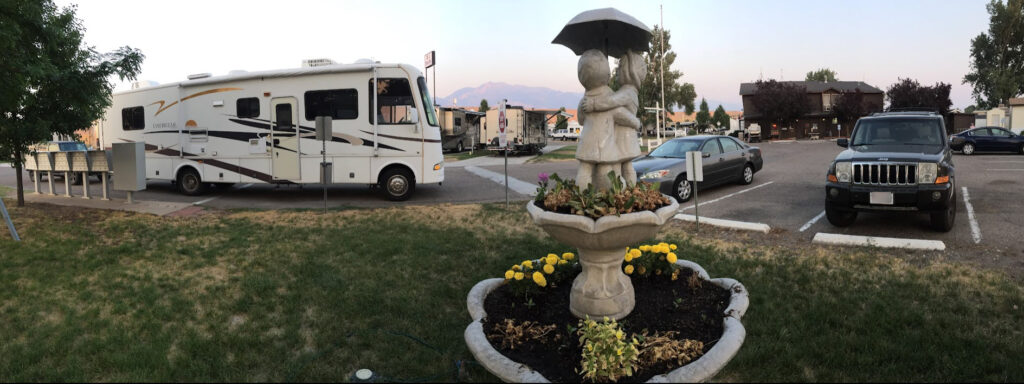
RV parks raise rates over $100 per night as cities forbid public camping

As the U.S. faces a double crisis of affordable housing and mass border crossings, a solution may be to create RV Nation, stretching entirely across the southern border. Rather than fence the border, the U.S. could develop it with tiny homes and RV parks with monthly site rent waived in exchange for “Southern Border Settlement Security.” RV Nation Security could monitor its perimeter and attempting crossings. The development of RV Nation would include unbroken security fencing of RV Nation parks. Instead of fencing the border, fence the RV parks.

A side benefit of RV Nation would be the employment of veterans, seniors, the unemployed, and others who wish to build the infrastructure and services needed across RV Nation including, roads, bridges, wells, solar, schools, police, fire, businesses, and churches. Across the border, Mexico would be encouraged to build a sister settlement of like kind, creating a 1 mile plus security development corridor based on friendship rather than enmity. The RV Nation creates a reverse migration strategy by fighting mass illegal crossing with healthy development.

The US Forest Service is restricting camping on its land. States like Tennessee are debating making it a felony to camp on public land. The northeast rations diesel as gasoline follows behind it in price pushing toward $10 per gallon. For such a time as this, the U.S. could recruit settlers to pioneer RV Nation, which would foster a secure sister community on the Mexico border.

Pastor Jim